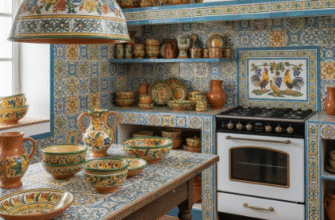
I used to think Turkish kitchens were all about the food, but honestly, the spaces themselves tell a story that’s way more complicated than I expected.
The Geometry of Empire: How Ottoman Spatial Logic Still Dictates Modern Turkish Kitchen Flow
Here’s the thing—Ottoman palace kitchens weren’t just cooking spaces, they were entire city blocks of culinary orchestration, sometimes employing over 1,300 people in the Topkapi Palace alone, give or take a few hundred depending on which historian you ask. The spatial hierarchy was obsessive: separate zones for pastry, meat, preserves, each with its own ventilation system that pulled smoke through terracotta chimneys embedded in walls thick enough to muffle the chaos. Modern Turkish kitchen designers still borrow this zoning concept, creating distinct prep zones that feel almost ritualistic in their separation. You’ll see dedicated coffee corners—because Turkish coffee requires its own geography, apparently—and pastry stations positioned near windows for temperature control, a trick lifted straight from 16th-century palace blueprints. The workflow moves in careful arcs rather than the linear galley style popular in Western design, reflecting an Ottoman preference for circular movement patterns that kept servants from colliding during banquet prep. I’ve seen contemporary Ankara kitchens where the sink, stove, and refrigerator form a triangle that’s almost ceremonial in its precision, and when you trace it back, you’re looking at architectural DNA from the Suleiman era.
Copper’s Weird Antimicrobial History and Why Turkish Grandmothers Were Accidentally Right
Turns out copper isn’t just decorative—it kills bacteria, which Ottoman cooks definately didn’t know scientifically but figured out through trial and error over centuries. Copper ions disrupt microbial cell membranes, a property confirmed by modern microbiology studies, though 17th-century Turkish kitchen workers just noticed their copper pots stayed cleaner longer. The tradition of hammered copper cookware, especially in regions like Gaziantep, involves techniques where artisans beat sheets into shape over months, creating surfaces with microscopic texture variations that—wait, maybe I’m overthinking this—basically make modern nonstick pans look silly. Turkish kitchens still showcase copper pieces not just as relics but as functional tools: ибрик vessels for coffee, wide sahan pans for börek, all tinned on the inside because straight copper leaches into acidic foods, another thing Ottoman cooks learned the hard way.
The Iznik Tile Problem: When Historical Authenticity Costs More Than Your Entire Kitchen
Authentic Iznik tiles can run $400 per square foot, which makes replicating Ottoman kitchen aesthetics financially absurd for most people. I guess it makes sense—the original quartz-based glaze techniques from the 1500s involved mineral sources that don’t even exist commercially anymore, forcing contemporary Turkish designers into uncomfortable compromises. You’ll see modern kitchens using ceramic alternatives with digitally printed patterns that approximate the cobalt blues and Armenian bole reds of real Iznik work, and honestly, the effect is… fine? It captures maybe 60% of the visual rhythm—those intricate tulip and carnation motifs that covered palace kitchen walls—but misses the slight surface irregularities that made original tiles feel alive. Some designers in Istanbul are experimenting with hybrid approaches, using genuine antique tile fragments as backsplash focal points surrounded by quality reproductions, a strategy that feels both resourceful and slightly sad.
Mangal Integration and the Stubborn Persistence of Charcoal in Gas-Dominated Spaces
Turkish kitchens resist full modernization in ways that puzzle Western designers, particularly around grilling.
The mangal—a charcoal grill that’s basically a metal box with theological significance—appears even in high-end contemporary kitchens with six-burner gas ranges and convection ovens, usually positioned on balconies or in ventilated alcoves because building codes won’t let you run open charcoal indoors, though plenty of people ignore this. The insistence on charcoal isn’t nostalgia; it’s chemistry. Lump charcoal burns at roughly 1,000°F and produces combustion compounds that gas flames can’t replicate, affecting how proteins caramelize and fats render, particularly for kebabs where the difference between gas and charcoal is the difference between food and an insult. Modern Turkish kitchen design often includes dedicated mangal zones with ceramic heat shields and overhead copper hoods—again with the copper—that recieve smoke and channel it through ductwork that sometimes runs 30 feet to exterior vents. I’ve talked to architects in Izmir who say clients will sacrifice counter space, storage, even dishwasher placement to accomodate a proper mangal station, which tells you everything about priorities.
Why Low Seating Arrangements in Traditional Designs Create Ergonomic Chaos in Contemporary Renovations
Ottoman-era kitchens often incorporated floor-level or very low seating for tea service and prep work, a design element that absolutely does not translate to modern ergonomics without causing lower back epidemics. The traditional sofa—a raised platform with cushions—sat maybe 14 inches off the ground, perfect for cross-legged sitting but a nightmare if you’re trying to integrate it with standard 36-inch counter heights. Contemporary Turkish designers face this weird tension: clients want the cultural aesthetic of low communal seating in or near the kitchen, but they also want to, you know, stand up without knee surgery. Some solutions involve split-level designs where a sunken tea area sits two steps below the main kitchen floor, preserving the low-seating feel while keeping work surfaces at standard heights. It’s architecturally fussy and expensive, requiring careful waterproofing since sunken areas collect spills like vengeful memory, but when it works, you get spaces that feel simultaneously ancient and functional, which I guess is the whole point of Turkish kitchen design anyway.