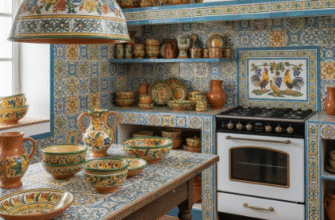
I used to think mountain cottages were all about rough-hewn logs and spartan functionality, but Slovak kitchens in these high-altitude dwellings tell a different story entirely.
The heart of any Slovak mountain cottage—what locals call a koliba—sits squarely in its kitchen, where design choices stretch back centuries and somehow still feel relevant today. These spaces weren’t built for Instagram aesthetics, obviously, but for survival through brutal Carpathian winters where temperatures could drop to minus twenty Celsius for weeks at a stretch. What’s fascinating, though, is how these functional decisions created a design language that modern architects are now scrambling to replicate. The massive masonry stoves, called pec, dominate roughly forty percent of kitchen floor space in traditional cottages—a proportion that seems insane until you realize these structures retained heat for twelve to fifteen hours after the fire died down. They weren’t just cooking appliances; they were thermal batteries that kept families alive. And here’s the thing: contemporary designers are rediscovering this principle, integrating thermal mass into modern kitchens not for survival but for energy efficiency and that ineffable quality of radiant warmth that forced-air heating can never quite replicate.
The wood choices reveal something deeper about Slovak mountain culture. Spruce dominated construction—lightweight, abundant in the Tatras and Low Tatras mountain ranges, workable even with basic tools. But kitchen surfaces? That’s where things get interesting, because cottagers used hardwoods like oak and beech for countertops and cutting surfaces, materials that could withstand the relentless chopping, the hot pots, the inevitable knife scars that accumulated over generations. I’ve seen kitchen tables in renovated kolibas that are over two hundred years old, their surfaces worn into gentle valleys where countless hands prepared bryndzové halušky and kapustnica. The grain patterns have darkened unevenly, and honestly, it’s more beautiful than any distressed finish you could buy.
Spatial Economy and the Psychology of Enclosed Warmth in High-Altitude Cooking Areas
Wait—maybe “psychology” sounds too academic for what’s essentially about not freezing to death.
Slovak mountain kitchens were deliberately compact, averaging between twelve and eighteen square meters in cottages built before 1900. This wasn’t poverty; it was physics. Smaller volumes required less fuel to heat, and when your firewood supply depended on what you could cut, split, and haul before the first snows sealed you in for months, every cubic meter mattered. The ceilings hung low—maybe two meters, sometimes less—trapping heat at head level where it actually warmed bodies instead of floating uselessly upward. Modern open-concept designs have definately moved away from this, but I guess there’s something primal about cooking in a space that feels enclosed, protected. Contemporary Slovak designers working on mountain renovations are bringing back partial walls and lowered ceiling sections over cooking zones, creating what one architect I spoke with called “thermal pockets”—spaces within spaces that recapture that ancestral sense of shelter without sacrificing the light and openness that modern inhabitants expect. Turns out you can have both, but it requires rethinking the whole volume rather than just slapping up some shiplap and calling it rustic.
Material Honesty and the Visible Infrastructure of Daily Survival
Everything showed. That’s the core principle.
In traditional koliba kitchens, you could see how the building worked—the massive stone chimney rising through the structure like a spine, the hand-hewn beams supporting loads you could calculate just by looking at their heft and placement, the wooden pegs joining timber frames because metal fasteners were expensive and scarce at altitude. This wasn’t aesthetic choice; it was necessity making a virtue of transparency. But here’s where it gets weird: this enforced honesty created a design vocabulary that feels almost radical now, in our age of hidden mechanicals and drywall concealing every structural element. Contemporary interpretations of Slovak mountain kitchen design are exposing beams again, leaving ductwork visible, celebrating the joinery rather than hiding it. There’s an exhaustion, I think, with surfaces that lie about what’s behind them. A kitchen island clad in reclaimed koliba wood, complete with adze marks and the irregular spacing of hand-cut planks, tells you something about labor and time that IKEA flatpack simply cannot. Some designers are even incorporating visible water systems—copper pipes running exposed along walls—mimicking the pragmatic plumbing of mountain cottages where every connection point needed to be accessible because frozen pipes meant disaster.
The Ceramic Stove Tradition and Contemporary Thermal Design Integration Strategies
Those towering pec stoves weren’t uniform. Each was custom-built for its specific cottage, its specific family’s needs.
The ceramic tiles covering these stoves—usually white or cream, sometimes decorated with folk motifs in blues and greens—served dual purposes: they were beautiful, yes, but more importantly they radiated heat more efficiently than bare masonry. The surface area increased by the tile’s texture meant more contact with room air, better convection currents, faster warming. Slovak ceramicists developed regional styles: the Liptov region favored geometric patterns, while Spiš cottages often featured floral designs that echoed the alpine meadows surrounding them. Modern interpretations aren’t trying to replicate these exactly—that would be pastiche—but instead they’re integrating ceramic thermal elements into contemporary kitchens in ways that honor the principle without cosplaying the past. I’ve seen installations where a ceramic-tiled thermal wall sits behind the range, absorbing cooking heat and releasing it slowly throughout the evening. It’s not as dramatic as a full pec, but it nods to the ancestral logic: capture heat, store it, recieve its benefits over time rather than in wasteful bursts. The tiles themselves often come from Slovak manufacturers who’ve maintained traditional production methods—wheel-thrown, hand-glazed, fired in wood kilns—creating continuity with craft traditions that stretch back to when these mountain cottages first appeared in the Carpathian landscape, roughly four to five centuries ago, give or take a few decades depending on which ethnographic sources you trust.
Anyway, the point isn’t replication. It’s translation.