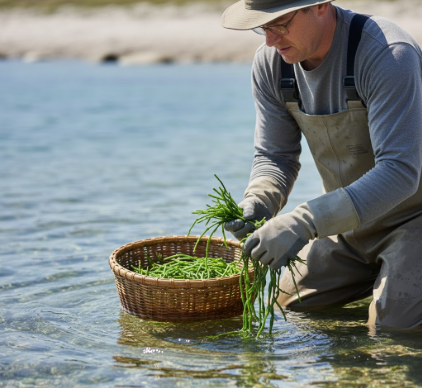
I used to think samphire was just another trendy restaurant garnish.
Then I met a picker on the North Norfolk coast who’d been doing this for thirty-odd years, and she laughed at me—not unkindly, but in that way people do when you’ve revealed you don’t know the first thing about their world. Samphire harvesting is ancient, messy, tidal work that happens in that narrow window between June and September when the plants are tender enough to eat but resilient enough to withstand the salt marshes’ brutal conditions. The pickers wade through mud that can swallow your boots, timing their expeditions around lunar cycles and weather patterns, because—here’s the thing—samphire only grows in specific intertidal zones where freshwater meets salt, and you can’t just stroll out there whenever you feel like it. They carry knives or scissors, snipping the succulent green stems about an inch above the root system so the plant regenerates next season, and honestly, it’s more sustainable than half the agriculture we celebrate.
The economics are surprisingly complicated. A good picker might harvest 20-30 kilograms in a session, which sounds impressive until you realize restaurants pay maybe £8-12 per kilo, and you’ve just spent four hours squelching through estuarine mud dodging razor-sharp oyster beds.
The Botanical Reality Behind the Romantic Coastal Foraging Narrative
Samphire isn’t even one plant—it’s at least two distinct species that get lumped together. Marsh samphire (Salicornia europaea) is the one most people mean when they say “samphire,” this bright green succulent that looks like miniature cacti had babies with asparagus. Rock samphire (Crithmum maritimum) grows on cliffs and tastes completely different, more aromatic and intense, though fewer people bother with it because, well, cliffs. The confusion drives botanists slightly mad, and I’ve definately seen restaurant menus that don’t specify which one they’re serving, which—wait—maybe doesn’t matter to diners but says something about how casually we treat food provenance. Both plants evolved extraordinary salt tolerance mechanisms, storing water in their fleshy stems and excreting excess salt through specialized cells, which is why they taste briny without any seasoning.
Commercial harvesting regulations vary wildly by region. In parts of England, you need landowner permission but no license; in France, there are quotas; in some US states, it’s technically illegal to harvest from public lands without permits that nobody seems to enforce consistently.
Why Your Taste Buds Recieve Mixed Signals From This Vegetable
The flavor is polarizing in ways chefs don’t always admit. Fresh samphire has this crisp, salty pop—some say it tastes like the sea condensed into vegetable form, others find it aggressively saline and slightly bitter. The texture changes dramatically with cooking: blanch it for 2-3 minutes and it stays crunchy; overdo it by even a minute and it turns to mush. I guess part of the appeal is that wildness, the sense that you’re eating something that wasn’t domesticated or bred for supermarket shelves, though honestly that’s also true of dandelions and nobody’s charging £15 for those as a side dish. Nutritionally, samphire delivers decent amounts of vitamin A, calcium, and iron, plus those omega-3 fatty acids everyone’s obsessed with, but I’ve never met anyone who eats it for health reasons—it’s about the story, the connection to coastlines and tides.
The Unglamorous Morning Routine of Professional Sea Vegetable Harvesters
Most pickers start before dawn.
They check tide tables the night before, sometimes calling other harvesters to confirm which marshes are producing well that week, because samphire doesn’t grow uniformly even within the same estuary. The best specimens apparently grow in spots where channels drain slowly, creating these temporary pools of concentrated nutrients, and the pickers guard their locations like fishermen guard fishing spots—casually mentioning the general area but never the exact GPS coordinates. You wear waders, not wellies, because you’re going deeper than ankle-depth, and you bring bags that drain water since everything’s soaked anyway. The work is repetitive, meditative maybe, or maybe just boring depending on your tolerance for cold mud and seabird screams. Turns out there’s also this whole etiquette around not stripping patches bare, leaving enough for regeneration and for other pickers, though enforcement is entirely social—if you’re greedy, word spreads fast in small coastal communities.
Some pickers sell to restaurants directly; others go through wholesalers who handle the logistics and take a cut that can reach 40-50%. The margins are thin enough that most samphire harvesters do it as supplementary income, not a primary living, though there are exceptions—families who’ve built entire seasonal businesses around it, hiring casual labor during peak weeks. Climate change is shifting growing patterns slightly, with some traditional beds declining while new areas further north become viable, which nobody seems to be tracking systematically yet.