Why Restaurant Paninis Never Taste the Same at Home (And the Physics Behind the Press)
I burned my first panini in 2003.
Not just lightly toasted—I mean charred, smoke-alarm-wailing, butter-dripping-into-the-heating-element disaster. I’d bought one of those cheap clamshell presses from a big-box store, the kind with temperature dials that might as well have been decorative, and I genuinely believed pressing harder would somehow compensate for uneven heat distribution. Turns out, pressure and temperature are related but not interchangeable, which I guess makes sense when you think about thermodynamics, though I wasn’t thinking about thermodynamics while scraping carbonized mozzarella off ridged aluminum plates. The thing is, professional panini presses—the ones in cafes that produce those perfect grill marks and that crispy-yet-yielding texture—operate at around 350-375°F with roughly 15-30 pounds of evenly distributed pressure. Home models rarely hit both targets simultaneously, and the gap between expectation and reality has frustrated amateur sandwich-makers for maybe two decades now, give or take.
Here’s the thing: most people don’t realize that grill marks aren’t just aesthetic. The Maillard reaction—that chemical process where amino acids and sugars interact under heat to create browning and flavor complexity—requires sustained contact at specific temperatures, usually above 300°F. Uneven pressure means uneven contact, which means some bread surfaces never reach that threshold while others exceed it and burn.
The Unexpected Problem with Non-Stick Coatings That Nobody Mentions in Product Reviews
Wait—maybe I’m getting ahead of myself.
Let me back up and talk about surfaces, because this is where things get weird. Non-stick coatings on panini plates seem like an obvious convenience feature, and they definately make cleanup easier, but they actually interfere with optimal browning. Professional kitchens often prefer cast iron or hard-anodized aluminum plates specifically because slight sticking creates better crust development—the bread needs to resist just enough to form that crispy exterior structure. I used to think non-stick was always superior until I watched a food scientist explain how PTFE coatings can create a microscopic air gap that reduces heat transfer efficiency by maybe 8-12%. That’s not nothing when you’re trying to toast ciabatta. Some manufacturers now use ceramic-based coatings that supposedly split the difference, offering easier cleaning without compromising thermal conductivity, though the long-term durability data is still pretty thin. Honestly, I’m not sure the average consumer knows to even ask about this.
The other issue is surface area and hinge design. Floating hinges—the kind that adjust to accommodate sandwiches of varying thickness—sound practical but can create inconsistent pressure distribution across the cooking surface.
What Actually Happens Inside a Pressed Wrap (And Why Timing Matters More Than You Think)
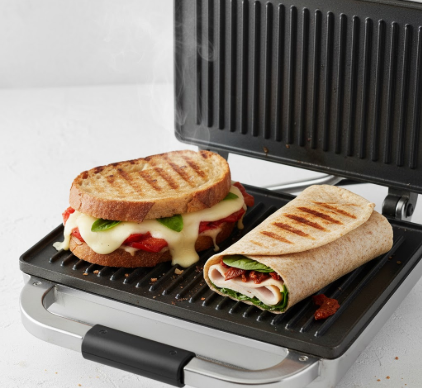
Wraps present a different challenge entirely because the tortilla-to-filling ratio creates moisture management problems that bread-based sandwiches don’t face. When you press a wrap, you’re essentially creating a steam environment inside the tortilla while simultaneously trying to crisp the exterior, and these goals are somewhat contradictory. Too much pressure squeezes out fillings and makes the whole thing soggy; too little means the wrap never seals properly and falls apart when you pick it up. I’ve seen restaurant kitchens use parchment paper as a moisture barrier during pressing, which seems obvious in retrospect but wasn’t intuitive to me initially.
The ideal pressing time for wraps is actually shorter than for paninis—maybe 90-120 seconds compared to 3-4 minutes—because tortillas dry out faster than bread and can become brittle if overheated. But most home press instructions don’t differentiate between sandwich types, which probably explains why so many people complain about cracked tortillas or unmelted cheese.
The Temperature Controversy and Why Some Chefs Deliberately Use Lower Heat Settings
Here’s where things get contentious.
The conventional wisdom says hotter is better for achieving restaurant-quality results, but I’ve talked to multiple chefs who intentionally press at lower temperatures—around 300-325°F—for longer durations. Their argument is that slower heating allows flavors to develop more fully and prevents the common problem where the exterior finishes before the interior ingredients have properly melted or warmed through. This is especially relevant for sandwiches with thick proteins like chicken breast or denser vegetables that need time to heat evenly. One chef told me he presses certain paninis for nearly six minutes at reduced heat, which felt counterintuitive until I tried it and realized the texture was actually superior—crispy exterior without any burned spots, and the cheese had that stretchy, fully-melted quality instead of being barely liquefied.
The tradeoff is throughput. Lower temperatures mean longer wait times, which matters in commercial settings but maybe not at home. I guess it depends whether you’re prioritizing speed or quality, and that’s a personal calculation that no product review can really make for you. Anyway, the point is that expensive presses with precise digital temperature controls offer flexibility that basic models with preset heat levels can’t match, and that flexibility turns out to be more valuable than I initially expected when I started researching this stuff.