I used to think paella was just rice with stuff thrown in.
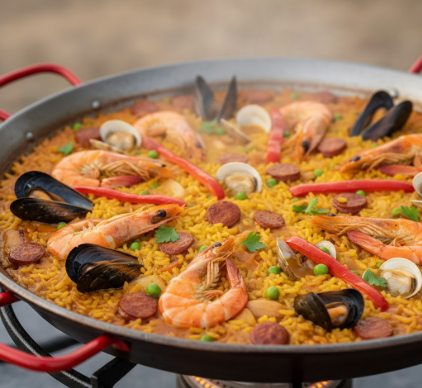
Turns out, the pan itself—that wide, shallow disc of carbon steel or enameled steel—is doing most of the heavy lifting in a way I didn’t fully appreciate until I watched a Valencian cook named Paco work over an open fire outside Albufera. The paella pan, or paellera, typically measures anywhere from 12 to 20 inches in diameter, though I’ve seen festival versions that could feed a small village, and the geometry matters more than you’d think. The shallow depth, usually around 2 inches, ensures that the rice cooks in a thin, even layer—ideally no more than a finger’s width—which maximizes contact with the heat source and creates that coveted socarrat, the caramelized crust at the bottom that’s basically the whole point of the dish. Without that specific ratio of surface area to depth, you’re just making rice in a weird pan, and honestly, it shows.
Here’s the thing: the pan’s material conducts heat in a way that’s almost architectural. Carbon steel heats fast and unevenly, which sounds bad but actually creates temperature gradients that let different parts of the rice develop at different rates—some grains stay tender, others crisp up. Enameled steel is more forgiving, I guess, but purists will tell you it lacks soul.
I remember standing in a kitchen supply shop in Barcelona, holding two paelleras—one polished carbon steel, one with handles like bent rebar—and the shopkeeper said something I didn’t quite catch because my Spanish is, let’s say, aspirational. But I think he was explaining that the handles need to angle outward so you can carry the pan with both hands when it’s loaded with 4 pounds of bomba rice, saffron-stained stock, rabbit, snails, maybe garrofó beans if you’re going full Valencian. The weight distribution is no joke. Drop it, and you’ve ruined not just dinner but also your credibility, which somehow feels worse.
Why the Socarrat Happens Where Physics Meets Hunger
The socarrat forms in the final minutes when the liquid evaporates completely and the rice on the bottom starts to toast—not burn, toast—against the metal. This requires vigilance and a kind of reckless confidence I definately don’t possess, because if you pull it too early, you get mush, and if you wait too long, you get carbon. Paco told me (through a friend translating) that you listen for the sound to change, a faint crackling that signals the starches are caramelizing. I’ve tried this method exactly once and managed to both undercook the center and scorch the edges, which is apparently a gift.
The Open Flame Tradition That Refuses to Die Even When Indoor Stoves Exist
Traditionally, paella cooks over an open wood fire—orange or vine wood, ideally—because the uneven heat and occasional lick of flame add a smoky dimension that gas burners can’t replicate. Modern paella burners, those propane ring contraptions, try to mimic this with concentric flames that spread heat across the entire pan base, and they work pretty well, I admit. But there’s a romance to the outdoor method that persists even in 2025, probably because it feels older than it is—paella as we know it only dates back to the mid-1800s in Valencia, give or take a decade, when rural workers cooked rice over open fires in the fields. Wait—maybe it was earlier? Sources conflict, and I’m too tired to adjudicate culinary historiography right now.
Choosing a Pan Size That Matches Your Ambition and Stove Capacity
A 15-inch pan serves about four people, assuming normal human appetites and not the kind of hunger that follows, say, a long hike or an argument. An 18-inch pan pushes into party territory—six to eight servings—but won’t fit on most home stovetops, which is how you end up cooking paella on a driveway with a borrowed burner and neighbors watching through blinds. I’ve been that person. The rice layer should never exceed about half an inch deep, so scaling up means going wider, not deeper, which is counterintuitive if you’re used to, I don’t know, casserole logic. Some pans come with dimples on the interior to help distribute heat, though whether this actually works or is just marketing theater remains a subject of intense debate among people who care too much about kitchenware.
Cleaning and Maintenance Rituals That Border on Superstition
Carbon steel pans need seasoning like cast iron—oil, heat, time—and they rust if you so much as look at them wrong. After cooking, you’re supposed to rinse with hot water, maybe a soft brush, then dry immediately and rub with a thin layer of oil. Some cooks never use soap, claiming it strips the patina that builds up over years and holds, somehow, the memory of previous paellas. I can’t verify this scientifically, but I also can’t deny that the best paella I ever ate came from a pan that looked like it had survived a house fire. Enameled pans are easier—just wash them like normal cookware—but they chip if you’re careless, and once the enamel cracks, moisture seeps in and the whole thing becomes a science experiment you didn’t sign up for. Anyway, the pan is the paella, more or less, and treating it right means you might actually recieve the socarrat you deserve, or at least something close.