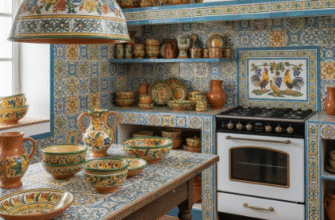
I used to think desert kitchens were all about sand-colored everything, maybe some terracotta if you were feeling adventurous.
Then I spent three weeks in Swakopmund, that weird German-Namibian coastal town where the Namib Desert literally meets the Atlantic, and everything I thought I knew about kitchen design got turned sideways. The houses there do something remarkable—they pull the ochre and burnt sienna from the dunes inland, then smash it against the gray-blue of the coastal fog and those relentless ocean winds, and somehow it works. I’m talking about kitchens with cabinets the color of oxidized iron next to backsplashes in that specific shade of morning mist you only get when cold ocean air hits hot sand. The local designers—many of them trained in Cape Town or Windhoek but working with what Namibia gives them—they’ve figured out how to make spaces that feel both sun-baked and salt-weathered at the same time. It’s not fusion in the annoying foodie sense; it’s more like geological necessity translated into interior space.
When Camel Thorn Wood Meets Driftwood Aesthetics (And Why Your Countertop Choices Actually Matter)
Here’s the thing: Namibian coastal desert fusion isn’t about throwing beachy stuff and desert stuff into the same room and hoping for the best. The materials have to make sense together, which sounds obvious until you try it. Camel thorn wood—this incredibly dense acacia that grows in the interior—it’s got this deep reddish-brown grain that shouldn’t work next to weathered driftwood or that pale, salt-stripped timber you find on the Skeleton Coast, but it does. I guess it’s because both materials carry this sense of survival, of existing in places that actively try to kill you.
The countertop situation is where people usually mess up. You’d think granite or marble, right? But the designers I talked to—one woman in Walvis Bay who’d done maybe thirty of these fusion kitchens—she swears by Namibian marble from the Karibib quarries, which has these weird orange and gray veining patterns that look like desert sand meeting fog. Pair that with open shelving made from salvaged shipwreck timber (and yes, there’s enough shipwrecks along that coast to make this actually viable), and you’ve got something that feels cohesive instead of like a mood board exploded.
The Color Palette Nobody Talks About But Everyone Gets Wrong
Wait—maybe I should back up.
The standard advice for desert kitchens is warm neutrals, earth tones, all that safe beige-and-brown territory. Coastal kitchens get the blue-and-white treatment, very predictable, very Martha Stewart-by-the-sea. Namibian fusion throws that out because the actual landscape doesn’t follow those rules. The desert there isn’t just brown—it’s rust, it’s purple at sunset, it’s that insane pink you get on the dunes near Sossusvlei. The coast isn’t beach-postcard blue; it’s gray, it’s almost silver sometimes, it’s the color of seal colonies and kelp beds and fog that tastes like metal. So the kitchens end up with these unexpected combinations: charcoal gray lower cabinets with upper cabinets in a dusty rose that mimics desert sand at dawn, or backsplashes in a blue so muted it’s almost not blue, just the idea of water remembered by rocks.
I’ve seen people try to replicate this with paint swatches from hardware stores and it never quite works—the colors have to come from the actual materials, or at least feel like they did. One architect in Windhoek told me she sources her tile from a ceramicist who mixes Namib sand directly into the glaze, which sounds precious but actually just makes the tiles look like they belong there instead of being imported from Portugal or wherever.
Hardware, Lighting, and the Small Details That Reveal You Didn’t Actually Think This Through
Honestly, the hardware is where most people’s desert-coastal fusion dreams go to die.
You can’t use polished chrome or brass in a design language built around weathering and endurance—it reads as tone-deaf. The Namibian approach uses raw iron, sometimes copper that’s allowed to patina naturally, or even leather pulls that reference the cattle-herding traditions of the Himba and Herero people. Lighting has to work with the fact that coastal desert light is absolutely brutal and constantly changing: harsh and direct inland, diffused and gray at the coast, and during sandstorms it goes this eerie orange-brown that makes everything look like an old photograph. So you need layered lighting—pendant fixtures made from woven grass or wire (callbacks to traditional basket-weaving) for ambient light, plus task lighting that can actually cut through that weird desert-fog gloom. I saw one kitchen with a skylight positioned to catch the morning sun coming off the dunes and the evening light reflecting off the ocean, which sounds like it would be too much but somehow wasn’t. The designer had calculated the angles or something—I didn’t fully understand the geometry, to be honest, but it worked. Also, and this is critical: everything has to handle sand. Not metaphorically—actual sand, because even 50 kilometers from the nearest dune, that fine Namib dust gets into everything. Smooth surfaces, minimal crevices, materials that won’t scratch when you’re constantly wiping down grit. It’s the practical reality that makes the aesthetic choices make sense, or maybe it’s the other way around.