I used to think all ceramic tiles were basically the same—you know, mass-produced rectangles that come in boxes of fifty.
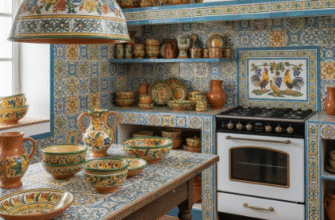
Then I visited a workshop outside Fez about three years ago, and honestly, I stood there watching this seventy-something artisan named Hassan cut zellige tiles with a hammer and a sharpened chisel, and I realized I’d been completely wrong about what handmade actually means. Each tile—and I mean literally every single one—gets cut by hand from larger slabs of glazed terracotta, shaped into geometric fragments that might be squares, diamonds, stars, or those intricate cross-shapes that tessellate in ways that make your eyes hurt if you stare too long. The glaze goes on before firing, which is backward from most modern ceramics, and it creates this slightly uneven, almost liquid surface that catches light differently depending on where you’re standing. Hassan told me through a translator that he’s been doing this since he was maybe twelve or thirteen, and his father did it before him, and his grandfather before that, going back roughly four hundred years in the same family workshop. The whole process takes weeks for a single batch—mixing the clay, shaping the base tiles, applying natural mineral glazes (cobalt for blue, copper for green, manganese for that deep eggplant purple), firing in wood kilns that can hit temperatures around 1000 degrees Celsius, then the painstaking hand-cutting into individual pieces. It’s inefficient by every modern manufacturing standard, and yet here’s the thing: that inefficiency is precisely what makes zellige irreplaceable in contemporary kitchen design.
The Western design world got obsessed with zellige maybe a decade ago, give or take. You started seeing it in Kinfolk magazine spreads, on Pinterest boards labeled “Moroccan minimalism,” in Brooklyn brownstone renovations where a single zellige backsplash could cost more than some people’s entire kitchen remodel. And look, I get the appeal—there’s something deeply satisfying about imperfection that’s intentional, or maybe not even intentional, just accepted as part of the process.
Why Kitchen Designers Keep Coming Back to This Seven-Century-Old Craft Despite Everything Modern Manufacturing Offers
Modern tile production can churn out thousands of identical units per hour with computer-controlled precision, consistent coloring, and dimensional accuracy measured in fractions of millimeters. Zellige can’t compete on any of those metrics, and it definately doesn’t try to. The edges are slightly irregular—you can feel it if you run your finger along the grouted lines. The glaze thickness varies, sometimes pooling thicker in corners, creating darker concentrations of pigment. Individual tiles from the same batch might differ by a shade or two because the kiln doesn’t heat evenly, or because the mineral content in that particular glaze mix was slightly different, or because atmospheric conditions during firing affected the chemical reactions in ways that are honestly still not completely understood even by the artisans who’ve been doing this their entire lives.
But here’s what I’ve noticed in probably fifteen or twenty kitchens I’ve photographed that use zellige: that variability creates a visual texture that your brain reads as alive somehow.
The technical term is “chromatic variation,” but that sounds too clinical for what actually happens when you install a few square meters of handmade zellige tile behind a stove or sink. Light hits those uneven glazed surfaces and fractures—some tiles absorb more, some reflect, some seem to glow from within depending on the time of day and the angle of natural light coming through windows. It’s subtle, not dramatic, but it makes a kitchen feel inhabited in a way that machine-perfect tile just doesn’t, at least not to my eye. Maybe I’m projecting. Maybe it’s some kind of cognitive bias where we assign value to things we know took human effort and time. But I’ve stood in kitchens with both types of tile, and I know which ones I remember afterward.
The Practical Realities Nobody Mentions When They’re Posting Aspirational Kitchen Photos on Instagram
Installation is a nightmare, honestly.
Standard tile installers often refuse zellige jobs because the irregular dimensions mean you can’t use spacers or assume anything will line up predictably. You need someone who understands that the grout lines are part of the design, that they’ll be wider in some places and narrower in others, and that this is correct, not a mistake. The tiles are more porous than industrial ceramics, so they’ll stain if you don’t seal them properly—and even then, acidic substances like lemon juice or tomato sauce can etch the surface if left too long. They’re fragile during shipping; breakage rates can hit twenty percent or more, which gets factored into costs that already start around sixty to eighty dollars per square foot for authentic Moroccan zellige, not counting installation labor that might run another forty dollars per square foot because of the specialized skill required. You can’t just wipe them down with harsh chemical cleaners; you need pH-neutral solutions and a gentle touch, which sounds ridiculous for a kitchen surface that’s supposed to withstand daily cooking chaos.
And yet—wait, maybe this is the point—people choose zellige anyway, not despite these limitations but maybe because of them. There’s something almost defiant about installing a handmade, high-maintenance material in the most utilitarian room of a house. It’s a small rebellion against the idea that everything should be optimized, durable, easy. I guess it makes sense in an era when so much of our built environment feels generic and algorithmically determined. Zellige says: this space required human attention, human imperfection, human time. And honestly? In the right kitchen, with the right light, it’s worth every complicated, expensive, fragile bit of trouble.