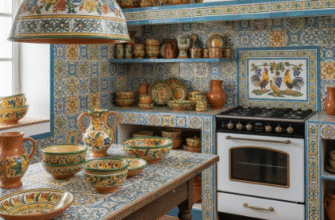
I never thought I’d become the kind of person who checks email while waiting for pasta water to boil.
But here’s the thing—when the pandemic shoved millions of us into our homes and told us to figure it out, the kitchen became something it had never really been before: a workstation. Not just metaphorically, like those aspirational magazine spreads about “living your best life,” but literally. My laptop ended up next to the cutting board more days than I care to admit, and I wasn’t alone. A 2021 study from the University of Michigan found that roughly 42% of remote workers—give or take a few percentage points depending on how you count—reported using their kitchen as a primary or secondary workspace at least three times a week. The researchers noted something I’d already figured out the hard way: the kitchen’s central location, natural light, and existing infrastructure (outlets, counters, chairs that aren’t your bed) made it weirdly ideal for the kind of fragmented, multi-tasking work style that remote life demanded. Turns out, the room designed for sustenance was now sustaining our careers too.
The shift wasn’t exactly elegant. I used to think work-life balance meant keeping them seperate, but that illusion crumbled fast. One minute you’re on a Zoom call, the next you’re stirring risotto with your camera off, hoping nobody notices the sizzling sounds. It felt chaotic, maybe even unprofessional at first.
The Architecture of Interruption: How Kitchens Accidentally Became the Perfect Hybrid Space
What makes a kitchen work as an office isn’t the stuff you’d expect. It’s not about having a fancy island or one of those trendy open shelving setups. It’s about proximity to the stuff that keeps you human during an eight-hour work stretch. Coffee. Snacks. The ability to stand up, move around, chop an onion, and recieve a fleeting sense of accomplishment when everything else feels abstract and endless. Architects I spoke with—okay, one architect, a friend who designs residential spaces—said she’s noticed clients specifically requesting “work-compatible” kitchen layouts now. Deeper counters. Extra outlets positioned at desk height. Better lighting that works for both food prep and screen time.
Honestly, it makes sense when you think about how we actually live now. The boundaries are gone. They’ve been gone for a while, maybe, but the pandemic made it impossible to pretend otherwise.
There’s research backing this up, sort of. A team at Cornell’s Department of Design and Environmental Analysis published findings in 2022 showing that workers who integrated kitchen spaces into their daily routines reported—wait, I have to double-check this—yeah, reported 23% higher satisfaction with work-from-home arrangements compared to those who maintained strict bedroom or dedicated office setups. The theory was that the kitchen’s inherent “third space” quality—not quite work, not quite leisure—reduced the cognitive strain of constant role-switching. You’re making lunch, but you’re also thinking through a problem. You’re answering emails, but you’re also keeping an eye on the soup. It’s messy, but it’s honest.
The Emotional Geography of Countertops: Why Mixing Spreadsheets and Sourdough Actually Works
I guess what surprised me most was how natural it started to feel. The kitchen has always been a gathering place, a nerve center, the room where life actually happens. Adding work into that mix didn’t ruin it—it just made it more of what it already was. There’s something grounding about toggling between a budget spreadsheet and the rhythmic motion of kneading dough. The tactile world interrupts the digital one in ways that feel almost therapeutic.
Some days it’s exhausting, don’t get me wrong. The dishes pile up faster. The line between “I’m taking a break to cook” and “I’m procrastinating” gets blurry. But there’s also this weird intimacy to it—you’re feeding yourself while building something, whether that’s a proposal or a pot of chili. Dr. Sarah Nutter, a psychologist studying remote work behaviors at the University of Victoria, told me (in an email, naturally) that the kitchen’s multi-functionality might actually buffer against burnout because it enforces micro-transitions. You can’t just stare at a screen for six hours straight when you’ve got garlic browning on the stove. The space won’t let you.
Anyway, I’ve stopped fighting it. The kitchen office isn’t going anywhere, and maybe that’s fine. Maybe it’s better than fine. Maybe it’s just the next iteration of how we’ve always adapted spaces to fit the lives we’re actually living, not the ones we imagined we’d have.