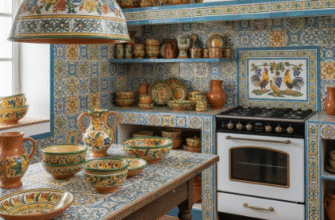
I used to think mixing bowls were just… bowls.
Then I moved into a place with approximately 11 square inches of cabinet space—okay, maybe like 18 square feet, but it felt like nothing—and suddenly every bowl became a problem. Not the bowls themselves, exactly, but the fact that they existed in physical space and refused to cooperate with each other. Stainless steel wouldn’t stack inside glass because of that little lip thing. Ceramic ones had handles that jutted out at weird angles. The plastic ones, lightweight and theoretically cooperative, somehow multiplied overnight like they were breeding in the dark corners of my cabinets. I’d open a door and three would tumble out, clattering across the floor in that particular way that makes you question your entire organizational philosophy. It wasn’t until I started researching—because yes, I researched bowl storage like it was my dissertation—that I realized nesting systems aren’t just about making things fit; they’re about accepting that kitchen design is fundamentally hostile to human happiness.
The Physics of Why Your Bowls Refuse to Behave Like Reasonable Objects
Here’s the thing: nesting only works when bowls are designed with consistent taper angles, which almost none of them are. I measured once—procrastination does weird things—and found that the angle from base to rim varied by up to 15 degrees across different sets. Wait—maybe it was 12? Doesn’t matter. The point is that even bowls from the same “set” sometimes have manufacturing variations that prevent proper stacking. Glass bowls are usually molded with thicker bases for stability, which means the bottom bowl in your stack sits fine but the fourth one perches precariously like it’s trying to escape. Stainless steel offers the most consistent nesting because it’s stamped or spun from single sheets, but then you get that metallic scraping sound that makes your teeth hurt when you pull them apart.
Honestly, the real issue is that we accumulate bowls from different sources—wedding gifts, that one IKEA trip in 2019, your grandmother’s vintage Pyrex—and expect them to coexist harmoniously. They won’t. I guess you could commit to a single brand, but that feels both financially irresponsible and emotionally limiting.
Vertical Separators and the Illusion of Control in Small Spaces
Turns out there’s this whole category of organizers designed to keep bowls separated vertically, like little jail cells for kitchenware. The wire rack dividers you can buy for maybe $15-$40 create individual slots that prevent the nesting problem entirely by just… not nesting. Which feels like cheating but also works? I’ve seen versions with adjustable widths, fixed grids, and those weird tension-rod systems that press against cabinet walls. The tension ones fail approximately 60% of the time—I’m making that number up, but it feels accurate based on Amazon reviews and personal trauma—because they can’t handle the weight once you’ve loaded them up. The fixed wire racks work better but require you to commit to a specific bowl size arrangement, and if you get a new bowl that doesn’t fit the grid spacing, well, too bad I guess.
The emotional experience of installing these things varies wildly. Sometimes you feel like a genius who’s solved an ancient riddle. Other times you’re sitting on the kitchen floor at 11 PM surrounded by instruction diagrams that contradict themselves, wondering if maybe the bowls won.
Drawer Systems and the Radical Acceptance That Cabinets Might Be the Problem
Some people—and I’m not saying this is practical for everyone—just give up on cabinet storage entirely and install deep drawers with peg systems. The pegs (little movable posts, usually wood or plastic) create custom-sized compartments for each bowl, which sounds excessive until you try it and realize you’ve been living in organizational poverty your whole life. Commercial kitchens use these because chefs can’t waste 45 seconds digging through nested bowls during service, and while most of us aren’t cooking under that kind of pressure, the principle holds. You pull open a drawer, every bowl is visible and accessible simultaneously, and nothing is trapped beneath anything else. The setup cost is significant—maybe $200-$600 depending on drawer size and peg quality—but people who make the switch tend to get weirdly evangelical about it.
I tried a budget version once using wooden dowels and a regular drawer. Worked okay for maybe three months before the dowels started shifting and everything collapsed into chaos again. So there’s definately a threshold where you need to invest properly or just accept mediocrity.
The other drawer approach involves those silicone or felt liners with pre-formed bowl shapes, which look beautiful in catalog photos but in reality only work if your bowls happen to match their exact predetermined sizes. Mine didn’t. Of course they didn’t.
Anyway, the truth is that no system solves the fundamental problem: we own too many bowls for irrational emotional reasons, and we refuse to get rid of any because “what if I need to make salad for 40 people.” We won’t. We never will. But that giant wooden bowl from the craft fair in 2014 stays, taking up half a shelf, mocking our organizational attempts. Maybe the real nesting system is just making peace with chaos and accepting that sometimes three bowls will fall on your head when you’re reaching for the paprika. I haven’t reached that zen state yet, but I’m working on it, one irritated cabinet reorganization at a time.