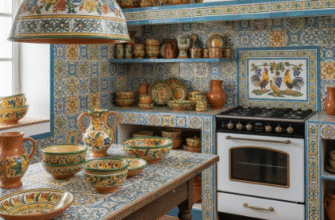
I used to think paprika was just something that sat in my spice drawer, slowly losing its flavor.
Then I walked into a kitchen in Budapest—honestly, I wasn’t even looking for design inspiration, just a place to eat—and the walls were this deep, rusty red that seemed to vibrate in the afternoon light. The owner, an older woman whose name I’ve embarrased myself by forgetting, gestured at the color and said one word: “paprika.” Turns out, this isn’t just a trendy design choice or some Pinterest fantasy. Hungarian kitchens have been incorporating paprika red for generations, maybe centuries if you count the dyed textiles that decorated rural homes. The color shows up in hand-painted ceramics, in embroidered dish towels, in the glazed tiles that line backsplashes. It’s a warm, earthy red—not the bright fire-engine shade you might expect, but something closer to dried chilies or autumn leaves. Wait—maybe that’s the point. Paprika itself comes from dried peppers, and Hungary produces some of the world’s finest varieties, particularly around Szeged and Kalocsa.
Here’s the thing: folk art wasn’t originally meant to be “art” at all. The floral motifs, the geometric patterns, the stylized tulips and roosters—these were functional decorations on everyday objects. Women painted furniture, carved wooden spoons, stitched tablecloths with patterns passed down through families. Some of these designs are so old they predate written records of Hungarian settlement in the Carpathian Basin, which happened roughly around 895 CE, give or take a few decades depending on which historian you ask.
When Traditional Patterns Meet Contemporary Cabinetry and Modern Appliances
The challenge with incorporating folk art into a modern kitchen is avoiding the theme-park effect. I’ve seen kitchens that look like they’re trying too hard, every surface covered in Matyó embroidery patterns or Kalocsa florals until your eyes don’t know where to land. The most successful designs I’ve encountered use restraint—a single accent wall with hand-painted tiles, or cabinet doors featuring subtle carved motifs inspired by traditional wooden chests. One designer in Debrecen told me she photographs antique textiles from the Ethnographic Museum and then has select patterns printed on kitchen backsplashes using modern ceramic techniques. The result feels both ancient and contemporary, which is harder to pull off than it sounds. Stainless steel appliances sit comfortably next to these folkloric elements when the color palette stays cohesive—paprika red, cream, deep forest green, and the occasional burst of golden yellow.
Anyway, color psychology might explain why these kitchens feel so inviting.
Red is supposed to stimulate appetite and conversation, which makes sense for a room designed around food and gathering. But the specific shade matters—that paprika red has enough brown and orange undertones to feel grounding rather than aggressive. I guess it makes sense that a culture obsessed with slow-cooked stews and family meals would gravitate toward warm, enveloping colors. The folk art adds another layer, a sense of rootedness and continuity. When you’re chopping vegetables on a counter with hand-painted floral tiles, you’re participating in a visual language that your great-grandmother might have recognized. Whether that’s comforting or suffocating probably depends on your relationship with tradition, honestly.
Sourcing Authentic Materials Without Turning Your Kitchen Into a Museum Display
This is where things get complicated. Genuine hand-painted Hungarian ceramics can be expensive, and the artisans who still practice traditional techniques are aging out without enough young people learning the craft. I visited a workshop in Kalocsa where a woman in her seventies was painting plates with the same patterns she’d been making for fifty years—incredible precision, muscle memory built over decades. But she wasn’t sure who would continue after her. Some designers use reproductions or digital prints, which feels like a compromise but maybe a necessary one. The alternative is watching these patterns disappear entirely from daily life, preserved only in museums.
Balancing Bold Color Choices With Practical Considerations Like Resale Value
Let’s be honest: a kitchen dominated by paprika red and folk art isn’t for everyone. Real estate agents might wince. The color can overwhelm small spaces if you’re not careful, and intricate patterns require visual breathing room. But here’s what I’ve noticed—people who commit to this style tend to love their kitchens in a way that neutral-beige-everything homeowners don’t. There’s personality here, a willingness to make a statement. You can always repaint walls, replace tiles. What’s harder to recapture is that sense of cultural specificity, the feeling that this room tells a story about where it comes from and what it values. I used to think design had to be timeless and universal. Now I think maybe it’s better when it’s specific and a little bit stubborn.