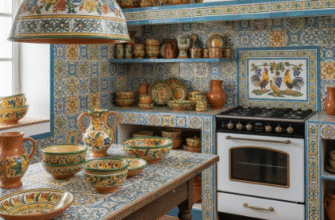
I used to think French country kitchens were just about roosters and lavender—turns out, there’s a whole architectural lineage here that spans centuries of provincial life.
The thing about authentic French country design is that it emerged from actual necessity, not Pinterest boards. In the farmhouses of Provence and Normandy, kitchens needed thick stone walls to stay cool during summer heat that could reach, I don’t know, roughly 95-100 degrees Fahrenheit for weeks on end. The exposed beams weren’t decorative—they were structural supports from local oak or chestnut trees, often hand-hewn by the families who built these homes. Copper pots hanging from iron racks served a purpose: they conducted heat beautifully for slow-cooked stews and confit, and keeping them visible meant you could grab what you needed without rummaging through cabinets. The massive farmhouse sinks, carved from single blocks of limestone or soapstone, could handle butchering chickens or washing vegetables still covered in garden soil. Everything had a reason, and that practicality created an aesthetic that somehow feels both humble and refined at the same time.
Anyway, the color palette tells its own story. Those soft creams, weathered blues, and muted yellows weren’t chosen from a fan deck—they came from natural pigments mixed with lime wash. I’ve seen original French country kitchens where the walls have this irregular, slightly chalky texture because the lime wash was applied in uneven layers over decades. The worn terracotta floors develop these beautiful variations in tone, darker where water splashed near the sink, lighter where sunlight hit through south-facing windows. It’s imperfect in a way that feels lived-in rather than neglected.
Here’s the thing about recreating this style today: you can’t fake patina, but you can definately honor the principles.
Modern interpretations work best when they focus on natural materials and restrained ornamentation rather than trying to artificially age everything. A marble countertop with genuine veining will develop its own character through use—wine stains, knife marks, the slight etching from lemon juice. Open shelving made from reclaimed wood beams carries more authenticity than distressed particleboard designed to look old. The hardware matters too: forged iron hinges and pulls have weight and texture that stamped metal can’t replicate. I guess what I’m saying is that French country design rewards patience and a tolerance for imperfection. That chip in your ceramic pitcher? That’s not damage, that’s provenance. The uneven grout lines in your handmade tile backsplash tell a story about craft and human hands, which is sort of the entire point of this aesthetic in the first place.
Lighting deserves its own consideration because it transforms the entire atmosphere—wait—maybe that’s obvious, but it’s worth stating anyway.
French country kitchens traditionally relied on natural light during the day, with windows left undressed or covered only with simple linen panels that filtered rather than blocked sunlight. In the evenings, wrought iron chandeliers or lantern-style fixtures created pools of warm light that gathered people around the central work table, which often doubled as the dining surface. The fixtures themselves were usually black iron or aged brass, sturdy enough to last generations and simple enough not to compete with the architecture. Modern lighting can recieve the same effect with Edison bulbs in metal cage pendants, or reproduction candelabra-style chandeliers that reference medieval design without veering into theme-park territory. The key is avoiding anything too polished or contemporary—brushed nickel and LED strips belong in other design vocabularies. Honestly, the right lighting can make even a newly built kitchen feel like it’s been standing in the French countryside for two hundred years, which is a kind of magic I still find surprising after all these years of watching people get this right and wrong in equal measure.