
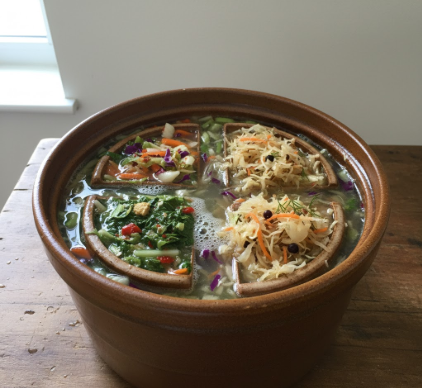
I used to think fermentation crocks were just fancy pickle jars for people with too much counter space.
Turns out, there’s something genuinely different happening inside those heavy ceramic vessels—something that has less to do with aesthetics and more to do with the peculiar biochemistry of lactic acid bacteria. When you pack cabbage into a standard jar with a lid, you’re gambling on whether enough carbon dioxide will escape without letting oxygen creep back in. But a proper fermentation crock, with its water-sealed channel around the rim, creates this one-way valve situation where CO2 bubbles out through the moat while external air stays blocked. It’s not revolutionary technology—Korean onggi pots have used similar principles for maybe 5,000 years, give or take—but it does solve the problem of surface mold that plagues so many home fermentation projects. I’ve seen perfectly good batches of sauerkraut ruined because someone lifted the lid too often, curious about the smell, inadvertently introducing oxygen that lets Kahm yeast colonize the brine surface. The water seal prevents that impulse entirely, since you can’t easily peek inside without dismantling the whole setup.
Here’s the thing: not all crocks are created equal, and the differences matter more than you’d expect. German-style crocks typically hold between 5 and 10 liters, with thick walls that maintain stable temperatures even when your kitchen swings between 65 and 75 degrees Fahrenheit. Polish crocks tend to be narrower and taller, which some fermentation enthusiasts swear creates better anaerobic conditions—though I’m not sure the bacteria care much about geometry.
The Microbiological Drama Happening in Your Crock That You Can’t See But Definately Should Understand
The fermentation process starts with Leuconostoc mesenteroides, these early-stage bacteria that tolerate salt but don’t need fully anaerobic conditions. They drop the pH from maybe 6.5 down to around 4.5 within the first few days, producing carbon dioxide and a bit of acetic acid. Then Lactobacillus plantarum takes over—more acid-tolerant, more aggressive—and pushes the pH down to 3.5 or lower over the next couple weeks. This succession only works reliably when oxygen stays out, because competing microorganisms (the ones that cause rot instead of fermentation) are mostly aerobic. Wait—maybe that’s oversimplified. Some Lactobacillus species are facultative anaerobes, meaning they can survive with or without oxygen, but they definitely prefer environments where they don’t have to compete with molds and oxidative yeasts.
Kimchi fermentation follows a similar pattern but with more variables.
Korean recipes often include fish sauce, salted shrimp, or anchovy paste—all of which introduce additional amino acids and nucleotides that feed different bacterial populations. Leuconostoc kimchii (named for exactly this application) dominates early fermentation alongside Weissella koreensis, both producing that characteristic fizzy texture and sour-funky aroma. The temperature sensitivity is more pronounced with kimchi, though: below 50 degrees Fahrenheit, fermentation stalls out and you end up with limp, under-sour vegetables. Above 75 degrees, it goes too fast and develops harsh acidity without the complex flavor compounds that come from slower microbial succession. A good crock helps buffer these temperature swings through thermal mass alone—several pounds of ceramic just don’t heat up or cool down quickly, which gives you a more forgiving fermentation window than a thin glass jar provides. I guess it makes sense that traditional fermentation happened in earthenware, since refrigeration wasn’t an option and ambient temperatures varied wildly.
Why the Weight Stones and Brine Levels Aren’t Just Pedantic Recipe Details
Every fermentation guide tells you to keep vegetables submerged, but honestly, people underestimate how much upward pressure sauerkraut generates. As cabbage releases water and bacteria produce CO2, the whole mass tries to float. Without proper weighting, the top layer breaks the brine surface and you get that slimy, discolored oxidation zone that technically isn’t dangerous but tastes foul. Ceramic weights solve this mechanically—they’re heavy, inert, and fit snugly against crock walls to pin down every shred. Some people use ziplock bags filled with brine, which works but introduces plastic contact over weeks of acidic fermentation, and I’m not convinced that’s ideal even with food-grade materials.
The brine itself needs to hit around 2-3% salinity for sauerkraut, slightly less for kimchi if you’re relying on the natural sugars and additional ingredients to lower pH quickly. Too little salt and you get soft, mushy vegetables colonized by the wrong bacteria—Clostridium species can sometimes survive low-salt environments, and while botulism is rare in high-acid ferments, it’s not impossible if pH stays too high. Too much salt and fermentation slows to a crawl, or stops entirely, leaving you with basically pickled cabbage that never developed the complex lactic sourness. I used to think you could just taste the brine to check salinity, but human taste perception is wildly inconsistent, so now I weigh everything: 20 grams of salt per kilogram of vegetables, adjusted slightly depending on how much liquid the cabbage releases naturally.
The Subtle Sensory Shifts That Tell You Fermentation Is Actually Working Versus Just Sitting There Growing Something Unpleasant
Good fermentation smells sour and slightly funky—not offensive, just alive. Bad fermentation smells putrid, like rotting garbage, and usually develops visible surface growth that’s pink, orange, or black instead of the harmless white Kahm yeast. The distinction seems obvious until you’re standing over your crock three days in, sniffing cautiously, wondering if that sharp note is normal tangy or early-stage spoilage. Honestly, it takes a few batches before your nose calibrates. The visual cues are easier: active fermentation produces bubbles that rise through the brine and collect in the water seal moat, sometimes vigorously enough that you hear faint hissing. If nothing’s happening after 48 hours at room temperature, either your salt ratio was off or the cabbage wasn’t fresh enough to harbor sufficient wild bacteria. Store-bought cabbage sometimes gets treated with antimicrobial rinses that inhibit fermentation—I’ve definately had batches fail for that exact reason, which is why I try to source from farmers markets when possible.
Anyway, after two to four weeks, depending on temperature and personal preference, you’ve got finished sauerkraut or kimchi that’ll keep in cool storage for months, maybe longer.




