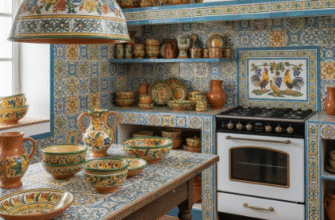
I used to think farmhouse kitchens were all shiplap and roosters.
Turns out, the real magic happens when you strip away the Pinterest-board clichés and focus on what actually made those old working kitchens function—which, honestly, wasn’t about aesthetics at all. The original farmhouse kitchen was a utilitarian beast: wide plank floors that could handle mud and spills, deep sinks for washing vegetables straight from the garden, open shelving because cabinet doors were an expensive luxury, and massive tables that doubled as prep surfaces and eating areas. Those features weren’t design choices, they were survival strategies. But here’s the thing—when you transplant that same pragmatic approach into a modern context, suddenly you’ve got a kitchen that feels both timeless and weirdly contemporary, like discovering your grandmother’s cast iron skillet outperforms your $300 nonstick pan.
The challenge is balancing that rough-hewn authenticity with the conveniences we’ve grown accustomed to. You want the warmth of reclaimed wood beams, but you also want induction cooktops and soft-close drawers. I’ve seen people gut entire kitchens trying to achieve this balance, only to end up with something that feels like a stage set—too perfect, too coordinated, missing that lived-in patina that makes a space feel genuine.
The Architecture of Honest Materials and Why Your Countertop Choices Actually Matter More Than You Think
Wait—maybe I should back up.
The material palette in a farmhouse kitchen isn’t just about looking rustic; it’s about choosing surfaces that age gracefully and can withstand actual use. Butcher block countertops develop knife marks and stains that become part of their character—something granite never manages to pull off. Soapstone, which farmers used for sinks in the 1800s (give or take a few decades, I’m not a historian), develops a darker patina over time from the natural oils in your hands. These materials have memory. They record your life in a way that’s oddly comforting, like how a well-worn leather jacket fits better than a new one. The modern twist? Pairing these traditional surfaces with stainless steel appliances or matte black fixtures creates visual tension that keeps the space from feeling like a museum installation. I guess it’s about acknowledging that we live now, not then, but we can still borrow the good parts.
Stone floors—limestone, slate, even concrete—ground the space literally and figuratively. They’re cool underfoot in summer, durable enough to handle dropped cast iron, and they don’t flinch at water spills.
Open Storage Systems That Prove Hiding Everything Isn’t Always the Answer to Kitchen Organization
Here’s where farmhouse design gets practical in ways that feel almost radical compared to contemporary kitchen trends. Open shelving forces you to edit your possessions—you can’t hide the chipped mugs or mismatched Tupperware, so you either get rid of them or embrace the visual chaos. I’ve noticed that kitchens with open storage tend to feel more active, more used, probably because everything’s within reach and you’re not constantly opening and closing cabinet doors. The downside? Dust. And the fact that you can’t pretend you don’t own seventeen coffee mugs. But the upside is significant: you actually use what you have instead of forgetting about it in some dark corner cabinet. Pot racks suspended from the ceiling, pegboards for utensils, hooks for mugs—these aren’t decorative choices, they’re functional strategies that happen to look good. The modern addition might be incorporating some closed storage for the less photogenic items (cleaning supplies, plastic grocery bags you’re definately going to reuse someday), creating a hybrid system that’s honest but not overwhelming.
Lighting Design That Understands Kitchens Are Actually Multi-Purpose Rooms Where Life Happens Constantly
Farmhouse kitchens were often the warmest room in the house, so they became the de facto gathering space.
That hasn’t changed, which means your lighting needs to be flexible enough to handle everything from intense food prep to late-night conversations over wine. Pendant lights over islands—especially ones with Edison bulbs or metal shades—provide focused task lighting while adding vertical visual interest. But you also need ambient lighting, which is where recessed cans or track lighting come in, even though they feel decidedly unfarmhouse-like. The trick is layering: combine period-appropriate fixtures with modern tech like dimmer switches and LED bulbs that don’t hum. Under-cabinet lighting, which didn’t exist in 1890, is non-negotiable for actually seeing what you’re chopping. I used to resist mixing lighting styles because it felt inconsistent, but honestly, consistency is overrated—functionality matters more. Natural light remains king, though, so if you can add windows or enlarge existing ones, do it. Farmhouses had big windows because candles were expensive and daylight was free; we have big windows because we’ve remembered that humans need sunlight to not feel like depressed cave dwellers.
Anyway, the real test of a farmhouse kitchen isn’t whether it photographs well for Instagram—it’s whether you can make bread at 6 AM, host a chaotic family dinner at 7 PM, and sit at the table doing paperwork at 11 PM without feeling like you’re in the wrong room for the activity. The design should recede into the background of your life, supportive but not demanding attention, which is probably what those original farm kitchens did best.