I used to think English kitchens were all about cream-colored Agas and copper pots hanging from ceiling racks.
Turns out, the reality is way messier—and honestly, more interesting. English kitchen design splits roughly into two camps: the cozy cottage aesthetic, which leans into worn wood and mismatched crockery, and the manor style, which pulls from Georgian and Victorian grandeur with its tall ceilings and butler’s pantries. Both share a kind of lived-in quality that American kitchens, with their obsessive granite countertops and stainless steel appliances, sometimes lack. I’ve spent time in both types—cramming myself into a 200-year-old cottage kitchen in the Cotswolds where the ceiling was so low I kept hitting my head on exposed beams, and later standing in a sprawling manor kitchen in Hampshire where the island alone was bigger than my first apartment. The cottage kitchen felt like cooking inside a hug; the manor kitchen felt like cooking inside a museum, but one where you’re actually allowed to touch things. The difference isn’t just scale—it’s philosophy, it’s history, it’s the accumulated weight of generations who cooked in these spaces before Instagram existed. Wait—maybe that’s what makes them feel so oddly comforting now.
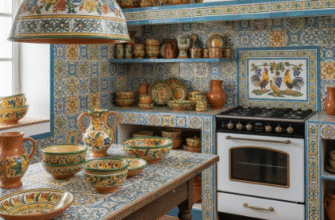
Here’s the thing about cottage kitchens: they’re designed for small spaces and big emotions. The typical cottage kitchen rarely exceeds 100 square feet, which sounds claustrophobic until you realize how efficiently every inch gets used. Open shelving isn’t a trendy choice—it’s a practical one, born from centuries of making do with limited cabinet space. You’ll find plate racks above sinks, narrow spice shelves wedged between windows, hooks everywhere for mugs and utensils. The color palette tends toward warm creams, soft greens, and that particular shade of blue that shows up in Wedgwood pottery.
Anyway, manor kitchens operate on a completely different logic—they were built for staff, not family.
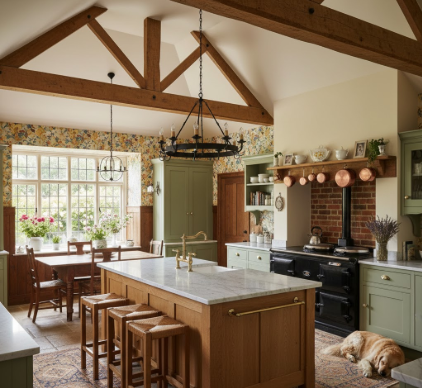
The original manor kitchens from the 18th and 19th centuries were designed as working zones separate from the main house, sometimes connected by long corridors so cooking smells wouldn’t reach the dining room. Modern interpretations keep the scale but soften the hierarchy—you get those massive prep islands, but now they’re gathering spots rather than workstations for servants. The materials shift upscale too: marble or soapstone counters instead of butcher block, bespoke cabinetry with intricate moldings, maybe a La Cornue range in some eye-watering color like French blue or polished brass. I guess it makes sense that these kitchens feel performative—they were literally designed for performance, for producing elaborate multi-course meals that would impress guests. The weird thing is how many contemporary designers try to recieve that grandeur in suburban homes where nobody’s hosting twelve-course dinners. It creates this odd disconnect, like wearing a ballgown to the grocery store.
The cottage-manor divide shows up most clearly in how each style handles imperfection and patina over the years.
Cottage kitchens embrace wear—the nicked farmhouse table, the slightly warped cabinet doors, the uneven flagstone floors that have settled over centuries. There’s an anti-perfectionism baked into the aesthetic, which probably explains why it photographs so well on social media; it gives people permission to stop obsessing over matching everything. Manor kitchens, by contrast, maintain a kind of formal polish even when they’re trying to feel relaxed. The imperfections are more controlled—an antique brass faucet that’s deliberately aged, reclaimed wood beams that have been carefully treated and installed by craftsmen. Both approaches are valid, I suppose, but they reveal different attitudes toward time and use. The cottage says: this kitchen has survived, adapted, absorbed the chaos of daily life. The manor says: this kitchen has been preserved, curated, maintained according to certain standards. I’ve noticed that younger homeowners, especially those in their thirties and forties, tend to gravitate toward cottage aesthetics even when they have manor-sized budgets, which maybe says something about our current cultural moment—this desire for authenticity, for spaces that feel like they have stories rather than just price tags.
Honestly, the most successful English kitchens I’ve seen blend both traditions without getting too precious about it. They’ll pair a cottage-style farmhouse sink with manor-scale cabinetry, or install rustic open shelving alongside a professional-grade range that wouldn’t look out of place in a country estate. The key seems to be understanding that these aren’t just aesthetic choices—they’re spatial grammars developed over centuries of actual cooking, actual living, actual spills and burns and family arguments over Sunday roast. You can copy the look with a Pinterest board and a decent contractor, but capturing the feeling requires something harder to quantify: a willingness to let the kitchen become imperfect, to let it accumulate its own history rather than trying to freeze it in some idealized version of English countryside living that probably never existed in the first place. Wait—maybe that’s the real secret. These kitchens work best when you stop treating them like museum installations and start treating them like the messy, essential, slightly chaotic hearts of homes they were always meant to be.