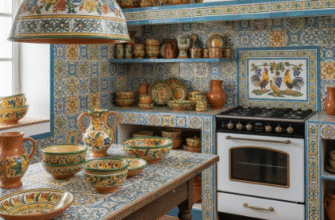
The Ceramic Tile Stove That Changed Everything About Winter Comfort
I used to think radiators were the only sensible way to heat a room.
Then I spent a January in a 19th-century apartment in Prague, where this massive tiled structure—a kachlová kamna, they called it—dominated the corner of the kitchen like some kind of benevolent giant. The thing was covered in hand-painted ceramic tiles, cream and blue, with these ornate floral patterns that honestly looked like someone’s great-grandmother had spent way too much time perfecting. Turns out, these tile stoves have been the backbone of Central European home heating since roughly the 1400s, give or take a few decades. They work by burning wood in a firebox, but here’s the thing—the smoke travels through a labyrinth of internal chambers before exiting, which means the ceramic mass absorbs heat for hours. You light it once in the morning, and it radiates warmth until well past midnight. The efficiency is staggering, something like 80-90% heat retention compared to maybe 30% for an open fireplace.
My host showed me how to load the firebox—smaller pieces first, then the big logs—and I remember feeling skeptical that this antique could possibly compete with modern heating. I was wrong. The heat it gave off was different, softer somehow, not the dry blast of forced air but this steady, breathable warmth that made the whole kitchen feel alive.
Why Every Czech Kitchen Used to Have a Built-In Bench That Nobody Sits On Anymore
Walk into any renovated farmhouse kitchen in Moravia and you’ll probably see it: a wooden bench built directly into the wall, often near the stove, sometimes with storage underneath.
These weren’t just seats—they were the original multi-functional furniture, designed when space was expensive and every square meter had to earn its keep. Families used them for eating, obviously, but also for food preparation, mending clothes, and even as sleeping spots for children on particularly cold nights when being close to the stove meant survival. The wood was usually oak or beech, dense enough to withstand decades of use, and the craftsmanship—dovetail joints, hand-planed surfaces—reflected a time when furniture was meant to outlast the people who built it. I’ve seen benches in museums with worn grooves where generations of elbows rested, and it’s hard not to feel something, this strange mix of nostalgia for a life I never lived and relief that I don’t have to live it. Modern Czech kitchens sometimes include a decorative version, a nod to tradition, but mostly they’ve been replaced by modular seating that you can, you know, actually move.
The Painted Cupboard Problem and What It Says About Preservation Versus Practicality
Here’s where things get messy.
Traditional Czech kitchens featured these stunning hand-painted cupboards—usually pine or linden wood, decorated with folk motifs like roosters, flowers, geometric patterns in reds, blues, and yellows. The paint itself was often made from natural pigments mixed with linseed oil, which gave it this matte, slightly uneven finish that contemporary designers now spend thousands trying to replicate. But the original cupboards weren’t built for modern appliances. They’re too shallow for a standard refrigerator, the shelves can’t handle the weight of a microwave, and the wood expands and contracts with humidity in ways that make installing plumbing a nightmare. So you’re left with this choice: do you gut a piece of cultural history to make it functional, or do you preserve it and work around its limitations? I guess it depends on whether you see a kitchen as a living space or a museum. Some Czech designers have found a middle path—salvaging the painted panels and incorporating them into new cabinetry, keeping the aesthetic while updating the structure. Others think that’s a cop-out, that authenticity requires discomfort.
I’m not sure who’s right.
Limestone Sinks and the Unexpected Science of Water Hardness in Bohemian Households
You don’t think about limestone until you have to clean it.
Czech kitchens, especially in rural areas, often featured sinks carved from local limestone—pale gray, sometimes with fossil imprints visible in the stone. They’re beautiful, undeniably, but limestone is calcium carbonate, which means it reacts with acidic substances. Spill vinegar or lemon juice, and you’ll etch the surface. The water in much of Bohemia is notably hard, meaning high mineral content, which sounds like it wouldn’t matter until you realize that hard water leaves deposits that bond chemically with the limestone itself. I talked to a restorer in Český Krumlov who told me he spends half his time trying to reverse damage from people using modern cleaning products on antique sinks—bleach, ammonia-based sprays, anything with a pH below 7 is basically an acid attack on the stone. The traditional cleaning method was sand and water, abrasive enough to scrub but gentle on the material. Nowadays, people install limestone sinks for the aesthetic, then cover them with protective sealants that kind of defeat the purpose. The sink looks right but doesn’t age right, doesn’t develop that worn patina that comes from years of use.
Open Shelving Before It Was an Instagram Trend or a Pinterest Cliché
Central European kitchens had open shelving for purely practical reasons—wood was cheaper than cabinet doors, and you needed to see what you had because running to the store wasn’t really an option when the store was a day’s cart ride away.
The shelves were usually mounted on wrought iron brackets, simple scrollwork if the household had any money, plain L-brackets if not. Everything was on display: ceramic crocks for flour and sugar, copper pots (copper was prized for its heat conductivity, especially for making jam), wooden spoons worn smooth from use, maybe a row of painted plates if the family was prosperous. The aesthetic was accidental—form following function in the most literal sense—but it created this visual rhythm that contemporary designers now deliberately engineer. I’ve seen modern Czech kitchens that try to recapture this, and some of them work, but there’s always something a little too curated about them, like when you can tell someone’s bookshelf has been arranged for the camera. The original shelves had a kind of chaotic honesty, items placed where they were needed, not where they looked best. Dust was a constant issue, obviously, which is why traditional housekeeping involved daily wiping, a level of maintenance that doesn’t really fit with how we live now. Wait—maybe that’s the real difference between then and now: not the technology, but the time we’re willing to spend maintaining things.