I’ve walked through enough Croatian coastal homes to know that their kitchens tell a different story than the rest of the Mediterranean.
The Limestone Countertop Tradition That Nobody Outside Dalmatia Seems to Understand Properly
Here’s the thing—when you see those massive slabs of pale stone in a Split or Dubrovnik kitchen, you’re looking at brač limestone, quarried from the island of Brač for roughly 2,000 years, give or take a few centuries. The Romans used it for Diocletian’s Palace, and now it shows up in kitchens because it stays cool even when the August sun turns everything else into an oven. I used to think marble was the Mediterranean standard until I spent time in a renovated stone house near Hvar and realized the Croatians had been doing something entirely different all along. The surface develops this soft patina over decades, absorbing olive oil and wine stains in a way that would horrify an American suburban homeowner but somehow looks exactly right next to weathered wooden beams and terracotta floor tiles that have been there since someone’s great-grandmother was young.
Why Croatian Kitchen Windows Open Differently and What That Means for Your Ventilation Strategy
Wait—maybe this sounds trivial, but the window situation matters more than you’d expect. Traditional Croatian coastal kitchens have these tall, narrow shuttered openings that catch the maestral wind, that northwest breeze that kicks up most summer afternoons along the Adriatic. Modern designers trying to replicate the style often mess this up by installing standard casement windows that don’t create the same cross-ventilation pattern. The old kitchens were built before air conditioning, obviously, so the placement wasn’t aesthetic—it was survival. You’d have one window facing the sea and another on the opposite wall, creating a tunnel that pulled cooking smoke and heat straight through. I guess it makes sense that contemporary Croatian kitchen designs still follow this logic, even in apartments with central air, because turns out some traditional layouts actually work better than what we’ve replaced them with.
The Ceramic Tile Choices That Separate Authentic Adriatic Design from Generic Mediterranean Knockoffs
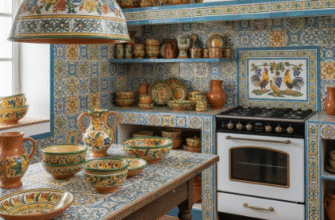
Honestly, this is where most people get it wrong. Croatian coastal tiles aren’t the bright blues and yellows you see in Greek or Spanish kitchens—they’re more subdued, often in creams, grays, and that specific shade of faded terracotta that looks almost pink in certain light. I’ve seen kitchens in Rovinj with hand-painted tiles from the 1920s, each one slightly different because they were made in small batches by local artisans who didn’t worry too much about perfect uniformity. The imperfections are the point. Modern reproductions try to replicate this but often end up looking too perfect, too consistent, which defeats the entire aesthetic. You want tiles that look like they’ve absorbed a hundred years of cooking steam and salt air, even if you’re installing them next week.
How the Konoba Cellar Kitchen Concept Influences Above-Ground Croatian Design Even Today
Anyway, there’s this whole tradition of konoba—basically tavern-style spaces that were originally wine cellars or ground-floor storage rooms with vaulted stone ceilings. These spaces stayed naturally cool and eventually became informal kitchens and dining areas where families would gather in summer because the main house was unbearable. The aesthetic stuck: low ceilings, stone walls, minimal decoration, heavy wooden furniture that looks like it could survive a siege. Contemporary Croatian kitchen designers reference this constantly, even in modern builds, by keeping ceiling heights lower than you’d expect, using reclaimed stone for accent walls, and installing those wrought-iron pot racks that hang low enough to make tall visitors nervous. It creates this cave-like intimacy that feels completely opposite to the open-concept philosophy dominating American kitchen design right now.
The Practical Reality of Incorporating Adriatic Style When You Don’t Actually Live Near the Sea
I used to recieve questions about whether you can pull off Croatian coastal style in, say, Kansas, and the answer is complicated. The style evolved from specific environmental pressures—heat, humidity, salt corrosion, limited space in old stone buildings—so replicating it elsewhere requires understanding the why behind the what. You don’t need limestone counters if you’re not dealing with Mediterranean heat, but you might want materials that age gracefully rather than looking dated after five years. The shuttered window concept works anywhere you want cross-ventilation. The muted tile palette makes sense if you’re going for timeless rather than trendy. What definately doesn’t work is cherry-picking individual elements—like adding a single statement tile backsplash—without committing to the overall restraint and functionality that defines the style. It’s not about decoration; it’s about creating a space that feels lived-in and practical, where the design emerges from how people actually cook and gather rather than from a Pinterest board assembled in twenty minutes.