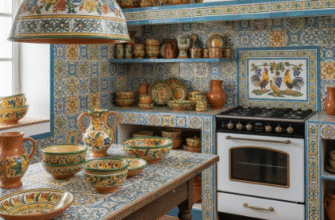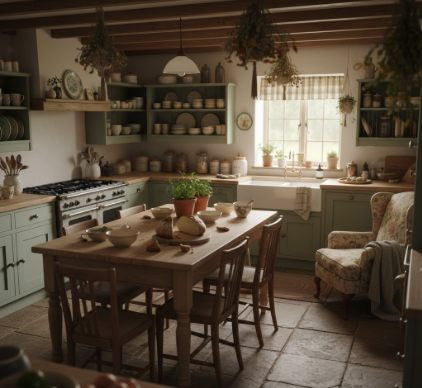
I used to think cottage kitchens were just about floral curtains and mismatched teacups.
Turns out, there’s this whole archaeology of comfort happening in these spaces—layers of use and memory that you can almost feel when you walk in. I spent time in a friend’s renovated farmhouse last spring, and her kitchen had this worn butcher block island that looked like it had survived roughly three generations of bread-kneading, give or take. The wood was scarred and stained in a way that made you want to touch it, which sounds weird but isn’t, really. These kitchens don’t apologize for their imperfections; they lean into them. Open shelving displays the chips in grandma’s pottery. Cabinet doors hang slightly crooked. The whole room breathes this strange honesty that magazine-perfect kitchens lack—they’re performing domesticity instead of living it.
Here’s the thing: the “lived-in” quality isn’t accidental, even when it looks that way. Designers I’ve talked to mention something called “patina layering”—basically the intentional mixing of old and new materials so nothing feels too coordinated. Maybe it’s a farmhouse sink paired with modern brass faucets, or subway tile with intentionally irregular grout lines.
The Surprisingly Complex Psychology Behind Surfaces That Show Their Age
Wait—maybe I should back up. There’s actual research on why worn textures make us feel calmer, though I can’t remember if it was a Oxford study or just something I read in a design journal at 2 AM. The theory goes that perfect surfaces trigger low-level anxiety because they demand maintenance; they’re constantly asking us not to mess them up. A cottage kitchen does the opposite. That pine table with the water rings? It’s already been messed up. You’re free.
Honestly, the color palettes do a lot of work here too.
Soft creams, faded sage greens, dusty blues—colors that look like they’ve been sun-bleached over decades even when they were painted last month. I’ve seen kitchens pull off that cozy feeling with just paint and lighting, no fancy reclaimed materials required. The trick, one designer told me, is avoiding anything too saturated or too stark. Cottage kitchens exist in the middle tones, the almost-colors. They’re chromatic comfort food, which is a pretentious way of saying they don’t shout at you when you stumble in for coffee at 6 AM. Natural light helps—lots of windows, sheer fabric instead of heavy drapes. But even artificial lighting gets softer here: pendant lights with fabric shades, under-cabinet LEDs on warm settings, maybe a lamp on the counter that has no business being in a kitchen but somehow works.
Why Collections of Ordinary Objects Create Unexpected Emotional Anchors in These Spaces
The clutter is curated, though calling it clutter feels wrong. Cottage kitchens collect things: wooden spoons in a crock, cookbooks stacked horizontally because the shelf’s too short, herb plants in terracotta pots that are definitely too small for proper root growth. I guess it makes sense that these objects provide what environmental psychologists call “micro-landmarks”—tiny familiar reference points that make a space feel known. Your brain doesn’t have to work as hard to feel oriented. You know where the good scissors are (in the chipped mug by the stove). You know that the third floorboard creaks. These aren’t design flexes; they’re the accumulated evidence of actual living, or at least very convincing simulations of it.
Textiles layer in too—linen dish towels that wrinkle immediately, cotton rugs that trap crumbs, woven baskets that sag under the weight of onions. Nothing is precious. Everything is touchable. I visited a cottage-style kitchen in the Cotswolds once where the owner had framed old recipe cards from her grandmother, stains and all. That’s the aesthetic in miniature: preserving the marks of use, not erasing them. It’s weirdly radical in a culture that’s constantly trying to sell us newness.
Anyway, the whole thing works because it tricks your nervous system into thinking you’ve been there before, that you’re safe, that someone’s made tea in this room ten thousand times and you’re welcome to make it ten thousand more.