I used to think picking kitchen cabinets was just about color.
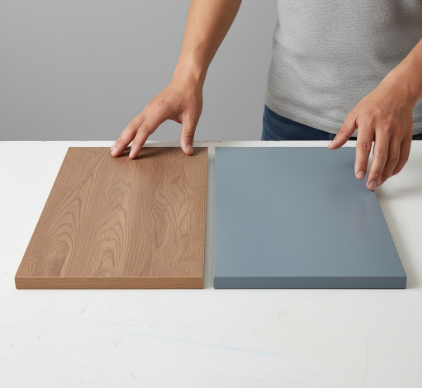
Then I spent three months renovating a 1940s bungalow in Portland, and I learned—the hard way—that material choice matters more than I ever imagined. Wood cabinets in that house had swelled near the sink, the laminate ones in the breakfast nook had peeled at the edges, and the painted surfaces showed every fingerprint my contractor’s crew left behind. Here’s the thing: each material behaves differently under stress, humidity, and the daily abuse of cooking life. Wood expands and contracts with moisture, sometimes up to 8% across the grain depending on the species—oak does it less than pine, but both do it. Laminate stays dimensionally stable because it’s essentially plastic sheeting bonded to particleboard or MDF, which sounds cheap until you realize that same stability means it won’t warp when your dishwasher leaks. Painted cabinets, whether they’re MDF or solid wood underneath, add another variable: the finish itself becomes a wear surface that can chip, yellow, or show brush strokes if the painter was having an off day.
My neighbor swears by her maple cabinets from 1987. They’ve been refinished twice, and they’ll probably outlast her grandkids. I guess that’s the appeal of solid wood—it’s repairable in ways laminate just isn’t.
The Moisture Problem Nobody Warns You About Until It’s Too Late
Laminate manufacturers love to talk about water resistance, and they’re not wrong exactly, but they’re not telling you the whole story either. The plastic surface repels water beautifully—until it doesn’t. Once moisture finds its way through a seam or a poorly sealed edge (and it always does eventually, especially around sinks), the particleboard core swells up like a sponge that’s been left in the bathtub. I’ve seen cabinets bubble and delaminate within six months in a humid basement kitchen in Charleston. Wood, on the other hand, absorbs moisture and releases it again, which sounds worse but is actually kind of elegant—it’s a living material that breathes. The problem is that breathing causes movement, and movement causes joints to loosen, doors to stick, and finishes to crack. Painted wood or MDF sits somewhere in between: the paint creates a moisture barrier, but if you nick it or the painter missed a spot (which happens more often than anyone admits), water sneaks in and the MDF core disintegrates faster than particleboard because it’s made of finer fibers. I used to think MDF was just cheap wood, but it’s actually engineered to be smooth and stable—until water touches it. Then it turns to mush. Wait—maybe that’s too harsh, but I watched a painted MDF cabinet door in a rental unit swell so badly after a pipe leak that the tenant couldn’t close it for three weeks.
Solid wood costs roughly 30-50% more than laminate, give or take, depending on whether you’re buying cherry or hickory or something exotic.
Painted finishes add another $15-30 per square foot if you’re hiring it out, and the quality varies wildly based on prep work and the number of coats.
What Actually Happens When You Live With These Materials for Five Years or More
The wood cabinets in my kitchen—red oak, factory-finished—looked perfect for about eighteen months. Then I noticed tiny scratches accumulating around the handles, a small dent where I’d bumped a cast-iron pan, and a spot near the stove where the finish had darkened from heat exposure. I kind of love those imperfections now; they tell a story. Laminate doesn’t tell stories—it either looks factory-new or it looks trashed, with no graceful in-between. Once the laminate edge peels or chips, there’s no fixing it without replacing the whole panel, and finding a match five years later is basically impossible because manufacturers discontinue patterns constantly. Painted cabinets age somewhere in the middle: they show wear through the paint, especially on edges and around hardware, but you can touch them up or repaint entirely if you’re patient. The problem is that repainting cabinets properly means removing doors, sanding, priming, and applying multiple coats—it’s a weekend project that turns into a week-long ordeal. I’ve definately underestimated that time commitment before.
Honestly, I think the choice comes down to what kind of imperfection you can tolerate.
Wood shows its age gracefully, with patina and character that some people find charming and others find shabby. Laminate hides wear until it suddenly doesn’t, then it looks catastrophically bad. Painted surfaces require maintenance—you’ll be touching up chips and scuffs every couple of years if you actually cook—but they offer flexibility in color that wood and laminate can’t match. I toured a mid-century home in Austin last year where the owner had repainted her cabinets three times in a decade, each time a different shade of gray-blue, and they still looked crisp because the underlying MDF was stable and the painter (her brother-in-law, apparently) knew how to prep surfaces correctly. That same flexibility doesn’t exist with wood—you can restain it darker but not lighter without serious stripping and bleaching—and it definetly doesn’t exist with laminate, which is stuck with whatever printed pattern it came with. Turns out the material you choose locks you into a relationship with maintenance, cost, and aesthetic evolution that lasts as long as you live in the house, and maybe longer if you’re the type who renovates for the next owner instead of yourself.
I still haven’t decided what I’d choose if I renovated again.
Maybe that’s the point—there’s no perfect answer, just trade-offs you learn to live with.