I used to think kitchen design was universal, you know? Like somehow granite countertops and subway tile transcended geography.
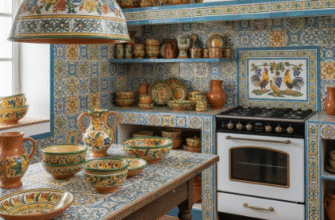
Then I spent three weeks in Praia, the capital of Cape Verde, staying with a family whose kitchen made me reconsider everything I thought I knew about culinary spaces. The room itself was small—maybe 120 square feet, give or take—but it contained what I can only describe as architectural DNA from three continents simultaneously. There was the Portuguese azulejo tilework climbing halfway up the walls in that distinctive blue-and-white pattern you’d find in Lisbon, but the layout, the flow of the space, that came from somewhere else entirely. West African communal cooking traditions shaped the central island, which wasn’t really an island in the American sense but more like a broad, hip-height work surface where three people could prep simultaneously without bumping elbows. The gas range sat against one wall, sure, but the charcoal braseira occupied equal importance near the window, and I watched my host switch between them depending on what she was making—electric for speed, charcoal for soul, she told me.
Here’s the thing: Cape Verdean kitchen design doesn’t get written about much in mainstream design publications, probably because it doesn’t fit neatly into Pinterest categories. It’s fusion, but not in that chef-y, deliberately eclectic way. It’s fusion born from 500-plus years of actual cultural blending.
The islands were uninhabited until Portuguese colonizers arrived in the 1460s, bringing enslaved West Africans with them, and that dual heritage shows up in literally every design choice. The materials alone tell the story—imported Portuguese ceramics next to locally-fired clay pots, European cabinet structures filled with African baskets and gourds. I guess it makes sense that a cuisine built on cachupa (a slow-cooked stew that’s part Portuguese cozido, part West African maafe) would require a kitchen that honored both traditions equally.
The Island That’s Not Really an Island But Actually Kind of Is
Wait—maybe I should clarify what I mean by “island” here.
In American kitchen design, an island is that freestanding counter situation in the middle of the room, right? Storage underneath, seating on one side, very HGTV. Cape Verdean kitchen islands serve a different purpose entirely. They’re lower, first of all—about 34 inches instead of 36, which I didn’t think would matter until I spent four hours helping prepare a wedding feast and realized the height let you put your whole body weight into pounding pilão (mortar and pestle work) without destroying your shoulders. The surface is often volcanic stone, which sounds exotic but makes perfect sense when you remember these are volcanic islands. That stone stays cool even in tropical heat, crucial for working with fresh fish and homemade cheese. Underneath, there’s typically open shelving rather than closed cabinets, a design choice that comes straight from West African kitchens where air circulation prevents mold and lets you see your entire ingredient inventory at a glance. My host kept her dried fish, her bags of corn and beans, her bottles of palm oil all visible and accessible.
Honestly, I found it more functional than my own kitchen back home with its deep, dark cabinets where things go to die.
Portuguese Tile Meets African Ventilation Systems in Ways Nobody Expected
The tile situation in Cape Verdean kitchens deserves its own anthropological study. You’ve got Portuguese azulejos doing their decorative thing, absolutely, but the application follows West African logic about heat and airflow. Instead of tiling entire walls like you’d see in Porto or Coimbra, Cape Verdean designers tend to tile in strategic bands—a meter-high stripe around the cooking area, a backsplash behind the sink, sometimes a tiled border at ceiling height. The rest of the walls stay plastered and painted, usually in light colors that reflect sunlight without creating glare. This creates convection currents, turns out. The tiled sections radiate heat differently than plaster, and the combination generates subtle air movement that helps with the chronic ventilation challenges of cooking in humidity. A Portuguese engineer would probably explain it better, but I watched condensation patterns for three days and the system definately works.
Plus it’s beautiful, which doesn’t hurt.
Charcoal, Gas, and the Radical Notion That You Need Both
Here’s where Cape Verdean kitchens get really interesting from a design perspective—they reject the idea that cooking technology moves in a linear progression from “primitive” to “modern.” Most kitchens I saw had at least two, sometimes three different heat sources, and they weren’t backups. They were actively used systems chosen based on the dish, the time available, the flavor profile desired. The braseira (charcoal burner) usually lives near a window or exterior wall for obvious smoke-management reasons, often with a small tiled alcove that contains the ash and reflects heat back toward the pot. Gas or electric ranges handle weekday meals, quick sautés, anything where temperature control matters more than flavor complexity. Some families still maintain a traditional fogão (wood-burning stove), especially in more rural areas, though I’ll admit those are fading. What struck me was the spatial planning required to accommodate multiple cooking modalities—you need different ventilation, different clearances, different storage for fuel sources. American kitchen designers freak out about the “work triangle” between sink, stove, and refrigerator. Try optimizing a work pentagon that includes a charcoal station.
Storage Solutions That Acknowledge Actual Human Behavior Patterns
I’ve seen a lot of kitchens optimize for aesthetics over function, but Cape Verdean design seems to start from a different premise entirely. What if we designed storage around how people actually cook rather than how we think they should cook? The result looks chaotic to minimalist sensibilities—open shelves displaying mismatched dishes, hanging baskets full of onions and garlic, bundles of dried herbs suspended from ceiling hooks, bottles and jars clustered on counters. But spend a day cooking in that environment and you realize everything’s positioned exactly where the workflow needs it. The beans live near the soaking basin. The spices hang above the main prep surface. The good olive oil (always Portuguese, usually from family connections) sits next to the stove in a repurposed whiskey bottle because pouring from the original container is awkward. There’s a practical logic that predates and possibly exceeds contemporary design theory.
Anyway, I’m not saying we should all install charcoal burners in our Brooklyn lofts. But maybe there’s something to learn from a kitchen tradition that synthesized multiple cultural approaches into something genuinely new, something that honors both efficiency and soul, something that works.