I used to think kitchen design was all about granite countertops and stainless steel appliances, until I spent three weeks in São Paulo watching how actual families cook.
Brazilian kitchen design doesn’t follow the minimalist Scandinavian playbook that dominates Pinterest boards—it’s louder, messier, more alive somehow. The color palettes pull directly from the landscape: deep jungle greens that remind you of the Atlantic Forest, sunset oranges borrowed from Ipanema skies, ocean blues so saturated they almost hurt to look at. I’ve seen kitchens painted in shades of mango yellow that would make a Minnesota homeowner break out in hives, but here’s the thing—against terracotta tile floors and dark wood cabinetry, those aggressive tropical hues suddenly make sense. The Brazilian approach treats color like a functional element, not decoration. Bright walls reflect natural light deeper into spaces, which matters when your goal is reducing reliance on air conditioning in a climate that routinely hits 95°F with suffocating humidity.
Walk into a traditional Brazilian kitchen and you’ll notice the boundaries feel negotiable. Walls seperating cooking areas from dining spaces often don’t reach the ceiling, or they’re replaced entirely with half-walls, sliding glass panels, or just—nothing. The open-plan concept isn’t some trendy HGTV import; it’s architectural pragmatism born from necessity.
Air circulation becomes critical when you’re slow-cooking feijoada for six hours or grilling churrasco indoors (which, yes, some people still do). The spatial openness also reflects Brazilian social patterns around food—cooking isn’t a solitary task performed behind closed doors but a communal activity where kids do homework at the kitchen island while grandmothers critique your knife skills and neighbors wander in without knocking. I guess it makes sense that the architecture would adapt to acommodate this constant flow of people. Modern Brazilian designers have formalized these traditional instincts into what they call “integrated living zones”—spaces where kitchen, dining, and living areas bleed together without clear demarcation, connected by consistent flooring materials and sightlines that stretch thirty feet or more.
The material choices tell their own story.
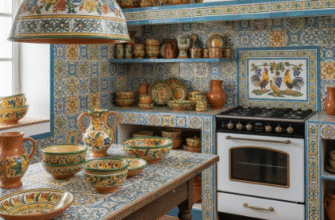
Concrete appears everywhere, but not the cold industrial concrete of Brooklyn lofts—this is concrete stained in warm earth tones, sometimes mixed with local aggregates that give it flecks of mica or quartz. Designers pair it with reclaimed hardwoods from demolished colonial buildings, creating this weird temporal collision between 18th-century joinery and contemporary geometric forms. I’ve seen countertops made from single slabs of Brazilian granite in colors that don’t exist anywhere else: blues with gold veining, greens so dark they look black until sunlight hits them. The stone industry there operates on a completely different scale than North America—a mid-range apartment might have stone surfaces that would cost $40,000 to install in Boston. Cabinetry tends toward heavy, almost furniture-like construction, with decorative tile inserts (azulejos) that add another layer of pattern and color.
Honestly, the ventilation engineering deserves more attention than it gets.
Traditional Brazilian kitchens often incorporate cross-ventilation strategies that predate modern HVAC by centuries—strategically placed windows and doors create pressure differentials that pull cooking smoke and heat out naturally. Wait—maybe that sounds too technical. The point is, people figured out how to stay comfortable while cooking without spending a fortune on electricity, and contemporary designers are rediscovering those principles rather than just throwing bigger air conditioners at the problem. Some newer developments integrate adjustable louvers and operable skylights that turn the kitchen into a semi-outdoor space when weather permits, blurring the line between inside and outside in ways that would definately terrify anyone living in a climate with actual winter.