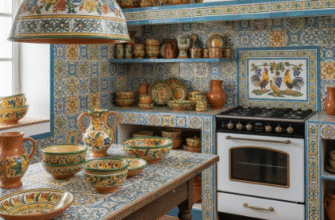
I used to think kitchen design was mostly about aesthetics—clean lines, marble countertops, maybe some fancy hardware.
Then I spent three weeks in Sarajevo, wandering through century-old mahala neighborhoods where the air smelled perpetually of burnt wood and slow-cooked onions, and I realized something crucial: Bosnian kitchens aren’t just rooms where food happens. They’re archaeological sites, layered with Ottoman memory, Austro-Hungarian practicality, and this distinctly Balkan approach to hospitality that feels almost aggressive in its generosity. The spatial logic is different here. Where Western kitchens increasingly prioritize the open-plan, entertainment-ready model—islands for guests to gather around with wine glasses—Bosnian cuisine spaces operate on a different principle entirely, one rooted in four to five centuries of Ottoman influence that nobody talks about enough. The layout isn’t about being seen cooking; it’s about the slow, contemplative process of preparing dishes that require, I don’t know, genuine patience.
Wait—maybe that sounds romantic. It’s not always. These kitchens can be small, inefficient by contemporary standards, sometimes frustratingly dim.
The Geometry of Hospitality and How Ottoman Spatial Planning Still Dictates Modern Bosnian Homes
Here’s the thing: Ottoman-era homes organized space around the concept of mahrem—privacy, especially for women, which shaped everything from window placement to kitchen location. Traditional Bosnian houses, even ones built in the 1920s or later, often tucked kitchens toward the back or side, connected to courtyards or gardens where herbs grew wild and somewhat chaotic. You’d find the kitchen adjacent to the čardak, that covered wooden porch where families actually lived during warm months. This wasn’t accidental. The flow between outdoor and indoor cooking space allowed for managing fire risk (most cooking involved open flames or wood-burning stoves called šporet) and for the necessary ventilation when you’re roasting peppers for ajvar or rendering fat for suho meso. Modern Bosnian kitchen renovations, even in Sarajevo’s gleaming new apartment blocks, often try to recieve—or recreate, I guess—this relationship with exterior space, even if it’s just a balcony barely big enough for a folding chair and some potted paprika plants.
Turns out spatial memory is stubborn.
Why Bosnian Kitchens Keep Their準備 Spaces Separate From Display and What That Reveals About Food Culture
I’ve noticed that even in contemporary Bosnian homes, there’s often a division between where food gets prepared and where it gets presented—a concept borrowed directly from Ottoman palace kitchens, where preparation areas were entirely separate from serving spaces. You’ll see this in the persistence of the ostava, a small pantry or storage room that’s almost always cooler than the main kitchen, where preserved foods live: jars of turšija (pickled vegetables), dried meat, homemade pekmez (fruit molasses), maybe some rakija that someone’s uncle distilled last autumn. This isn’t just storage; it’s a culinary archive. The main kitchen workspace tends to center around one or two key zones: the stove area, which in older homes might still feature a traditional wood-burning šporet (though most now use gas or electric), and a large preparation surface—often just a sturdy wooden table, not built-in counters—where the real work happens. The phyllo dough for pita gets stretched here, thin enough to read through, which requires roughly three square meters of uninterrupted space.
Honestly, watching someone make proper pita is humbling.
The Enduring Presence of the Sofra and Floor-Level Dining Traditions in Kitchen Design Choices
Even though most Bosnian families now eat at Western-style tables, the memory of the sofra—the low, round Ottoman dining table—persists in unexpected ways. Kitchen designs still often include lower cabinets and storage solutions that make sense if you’re sitting on floor cushions rather than chairs. I guess it makes sense that these spatial habits would linger, given that sofra dining was standard in Bosnia until, give or take, the mid-20th century in rural areas. Some families still bring out a sofra for special occasions, spreading it with a low tablecloth and arranging dishes in that specific circular pattern where everyone can reach everything. This influences how kitchens organize serving pieces: lots of small to medium-sized bowls and platters rather than a few large ones, because Ottoman-influenced Bosnian meals are about abundance through variety—ten different dishes in small portions rather than three large ones.
The visual effect is overwhelming, definately intentional.
How the Mangal and Outdoor Fire Culture Shapes Interior Kitchen Infrastructure Even in Urban Apartments
The mangal—a traditional charcoal grill that’s basically the Balkan soul made metal—remains central to Bosnian food culture, and its presence shapes interior kitchen design in ways that aren’t immediately obvious. Even apartments without balconies often include some accommodation for coal storage or fire-related tools, because Bosnians will find a way to grill ćevapi, even if it means a tiny electric mangal on a kitchen counter. Traditional homes had dedicated fire preparation areas, usually outside but covered, where coals would be prepared before being brought to the mangal or used in the kitchen. Modern Bosnian kitchens frequently include unusually robust ventilation systems—range hoods that seem overpowered for the stove size—because the cooking techniques (lots of roasting, charring, smoking) generate more smoke and heat than, say, steaming or poaching would. There’s also typically more heat-resistant surface area than you’d find in a comparable Western kitchen: stone, tile, sometimes copper, materials that can handle a hot pot being set down without ceremony.
The Unexpected Influence of Communal Cooking Rhythms on Storage and Workspace Multiplication
Bosnian cuisine operates on these cyclical, seasonal rhythms that Western meal-kit culture has sort of forgotten: there’s ajvar-making season, rakija-distilling season, turšija-pickling season. These are often communal activities, multiple family members or even neighbors working together, which means kitchens need to accommodate not just one cook but potentially four or five people working simultaneously. I’ve seen kitchens that look modest for daily use but have this hidden expandability—extra work surfaces that pull out, additional burners that can be added, storage for enormous pots that only emerge once or twice a year. The Ottoman tradition of collective food preparation for religious holidays and community events embedded itself into the physical space. You’ll find kitchens with multiple prep sinks, often small and utilitarian, positioned in corners where they’d be useless for one person but perfect when several people are working in rotation. The spatial logic isn’t about efficiency for solo cooking; it’s about capacity for collective effort, for those exhausting, satisfying days when your kitchen smells like smoke and vinegar and slowly caramelizing onions, and every horizontal surface is covered with jars waiting for lids.
Anyway, that’s probably why these kitchens feel so different—they’re designed for a different understanding of what cooking actually is.