I used to think artichokes were just difficult vegetables.
But here’s the thing—those thorny leaves aren’t just there to make your life harder in the kitchen, they’re actually a defense mechanism that evolved over thousands of years, maybe longer, give or take. The wild cardoon, artichoke’s ancestor from the Mediterranean basin, needed those spines to ward off grazing animals who’d otherwise devour the tender flower buds before they could bloom. When humans started cultivating these thistles—probably around 500 BCE in Sicily, though some botanists argue it was earlier—we selected for bigger hearts but never quite bred out all the thorns. So now we’re stuck with this half-domesticated plant that still thinks it needs armor, and honestly, it does make harvesting them feel like a small battle every single time.
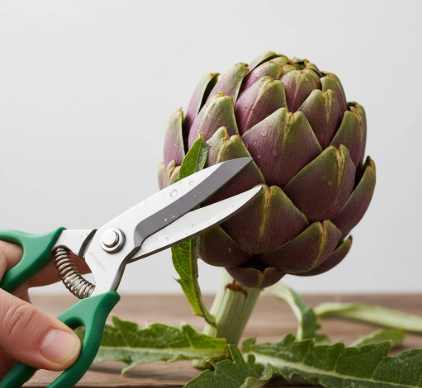
Kitchen scissors changed everything for me. Not fancy ones either, just regular household shears. You hold the artichoke by its stem, tilt it slightly, and start snipping those pointed tips off each leaf, working your way around in a spiral pattern until you reach the top.
The Science Behind Why We Even Bother Trimming These Botanical Weapons in the First Place
Turns out the thorns themselves contain trace amounts of cynarin, the same compound that makes artichokes taste sweet and makes water taste weird after you eat them. When you cut into those spines with scissors, you’re releasing volatile organic compounds that can actually irritate skin—not badly, but enough that professional artichoke farmers in California’s Central Valley wear gloves during harvest season. I’ve seen studies from the University of Catania showing that the thorn tips have a higher concentration of polyphenols than the leaf bases, which might explain why some chefs insist on leaving them on for roasting, claiming it adds bitterness that balances the dish. But for steaming? You definately want them off, because nobody enjoys fishing spine fragments out of their teeth halfway through dinner.
Wait—maybe I’m overthinking this.
The real reason scissors work better than knives has to do with the leaf structure itself, which is fibrous and surprisingly tough despite looking delicate. A knife blade tends to crush the cellulose fibers as it cuts, creating jagged edges that turn brown faster due to oxidation—enzymatic browning, specifically, caused by polyphenol oxidase reacting with oxygen when cell walls rupture. Scissors, on the other hand, create a cleaner shear cut with less cellular damage, which means less discoloration and less moisture loss during cooking. This isn’t some ancient culinary wisdom either; food scientists at the Institut National de la Recherche Agronomique in France only documented this phenomenon in the late 1990s, testing various cutting methods on globe artichokes and measuring phenolic compound leakage. Their findings suggested that scissor-trimmed artichokes retained approximately 12% more chlorophyll after steaming compared to knife-trimmed ones, though I guess that margin could vary depending on artichoke variety and storage time.
I still nick my fingers sometimes.
How Professional Chefs Actually Handle Artichoke Prep Without Losing Their Minds or Their Fingertips
Most restaurant kitchens I’ve visited don’t use scissors at all—they use serrated bread knives, which seems counterintuitive until you watch someone who knows what they’re doing. They slice the top quarter off entirely, then use the knife’s teeth to scrape down each leaf in quick strokes, removing thorns and about half the leaf in one motion. It’s faster but wasteful, and at home where you’re maybe preparing four artichokes instead of forty, scissors give you more control and preserve more of the edible leaf surface. Some cooks swear by kitchen shears with micro-serrated edges, claiming they grip the waxy cuticle layer better, but honestly I’ve never noticed a significant diffrence. The technique matters more than the tool—keeping your cuts consistent, working quickly to minimize oxidation, and dropping trimmed artichokes into acidulated water immediately to prevent that unappetizing brown discoloration that makes them look like they’ve been sitting out for days even when they haven’t.
Anyway, the thorns grow back if you leave artichokes on the plant too long.
The Weird Historical Reason Europeans Started Removing Artichoke Thorns in Renaissance Banquets
Catherine de Medici apparently loved artichokes so much she ate them at nearly every meal when she arrived in France in 1533, which scandalized the French court because artichokes were considered an aphrodisiac and unsuitable for young women. But the real controversy was that she insisted on having servants trim every single thorn before the artichokes reached her plate—a laborious process that could take fifteen minutes per artichoke with the primitive knives available then. This practice eventually trickled down to aristocratic households across Europe, where trimmed artichokes became a status symbol indicating you had enough servants to waste time on tedious vegetable prep. By the 18th century, cookbooks started including instructions for thorn removal, though they recommended small paring knives rather than scissors, which weren’t commonly used in kitchens until the Victorian era when mass-produced steel shears became affordable for middle-class households.