I used to think kitchens were just kitchens—functional boxes where you chop vegetables and pretend you know how to cook—but then I spent three weeks in Albania’s mountainous interior, and honestly, everything I thought I knew about Mediterranean design got flipped upside down.
When Stone Meets Sea: The Geographic Contradiction That Actually Works
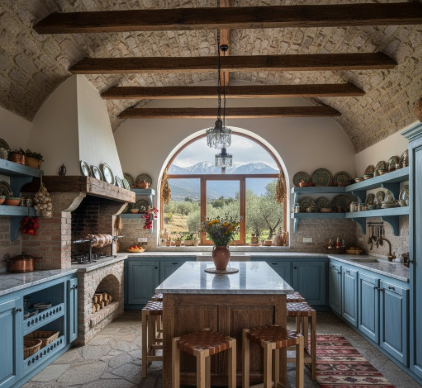
Here’s the thing about Albanian kitchen design: it doesn’t make sense on paper. You’ve got this landlocked mountain culture—rough, austere, built from necessity—colliding with coastal Mediterranean sensibilities that scream warmth, terracotta, olive groves stretching toward azure waters. The fusion shouldn’t work. Yet walk into a traditional Albanian home in Gjirokastra or Berat, and you’ll find kitchens that somehow reconcile these opposing forces with an elegance that feels almost accidental. The stone is local limestone, quarried from mountains that have stood for roughly 200 million years, give or take. The color palette pulls from the Adriatic—those deep blues, sun-bleached whites, the occasional burst of saffron yellow that references both coastal fishing villages and alpine wildflowers. I’ve seen modern designers try to replicate this aesthetic in Brooklyn lofts and London flats, and it never quite translates because they’re missing the essential contradiction: hardness softened by light, isolation opened by color.
Wait—maybe that’s oversimplifying it. The truth is messier. Albanian kitchens evolved under Ottoman influence, Venetian trade routes, communist-era scarcity, and post-1991 rapid modernization. You can’t seperate these layers cleanly. A typical mountain kitchen might feature hand-carved wooden shelves (19th-century craftsmanship) next to Italian-imported marble countertops (installed last year) beside copper cookware that’s been in the family since the 1960s. The fusion isn’t designed—it’s accumulated, layered, lived-in.
Functional Minimalism Born From Scarcity, Not Trend Cycles
Turns out, Albanian mountain kitchens were doing minimalism before Scandinavian design blogs made it a lifestyle brand. But this minimalism comes from a different place entirely—from decades when resources were limited, imports were restricted, and you made do with what the landscape provided. Stone floors because that’s what you had. Open shelving because cabinet materials were expensive. Central hearths because mountain winters are brutal and heating a whole house was impossible. I guess what strikes me now is how contemporary designers are rediscovering these solutions—thermal mass from stone walls, natural ventilation through strategically placed windows, multifunctional spaces—and marketing them as eco-innovations when Albanian grandmothers have been using these techniques for generations out of pure necessity.
The exhaustion of trend culture hits different when you realize people have been living this way for centuries.
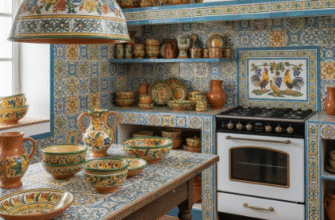
Modern Albanian kitchen design—especially in Tirana and coastal cities—takes these mountain fundamentals and injects Mediterranean fluidity. The rigid geometry softens. You get curved archways referencing both mosque architecture and Italian villa design. Tile work appears, intricate geometric patterns that echo Islamic art traditions filtered through Balkan sensibilities. Natural light becomes paramount—large windows, sometimes floor-to-ceiling, framing mountain or sea views depending on location. The color temperature shifts warmer. Where mountain kitchens relied on cool grays and earth tones, the coastal fusion introduces terracotta, warm whites, touches of that Mediterranean turquoise that somehow doesn’t feel out of place against alpine backdrops. I’ve watched Albanian designers navigate this fusion with an intuition that seems cultural rather than learned—they’re not consulting mood boards, they’re pulling from collective memory, family histories, landscapes that contain multitudes.
Material Honesty and the Rejection of Performative Authenticity
Here’s where Albanian kitchen design diverges from most Western Mediterranean aesthetics: there’s no nostalgia performance happening. Italian farmhouse kitchens often feel curated for Instagram—distressed wood that’s been artificially aged, copper pots that never touch flame, rustic beams installed in buildings constructed last decade. Albanian kitchens, especially those blending mountain and coastal elements, tend toward material honesty that borders on bluntness. If the stone is new, it looks new. If the wood is reclaimed, you can see the nail holes, the weathering, the actual history. This isn’t shabby-chic—it’s just acknowledging that buildings accumulate time visibly, and pretending otherwise is exhausting.
I definately noticed this material frankness extends to spatial planning. Albanian mountain homes traditionally centered kitchens as communal spaces—not open-concept in the modern real estate sense, but genuinely multipurpose rooms where cooking, eating, socializing, sometimes even sleeping happened in proximity. The Mediterranean influence doesn’t erase this functionality; it enhances it with better lighting, improved ventilation, more generous proportions when space allows. You end up with kitchens that feel expansive without being wasteful, communal without being chaotic.
Anyway, the fusion works because it’s not really fusion in the trendy restaurant sense—it’s integration born from geography, history, and the simple fact that Albania sits where mountains meet Mediterranean, where East encounters West, where austerity and abundance have been negotiating for centuries. The kitchens just reflect that ongoing conversation, imperfectly, beautifully, without trying too hard.