I used to think kitchen design was just about cabinets and countertops.
Then I spent three weeks in Maputo talking to architects, historians, and home cooks who showed me how centuries of Indian Ocean trade routes had literally reshaped the way Mozambicans organize their cooking spaces—and honestly, it’s one of those things that once you see it, you can’t unsee it. The dhows that sailed between East Africa, the Arabian Peninsula, India, and Southeast Asia from roughly the 9th century onward didn’t just carry spices and textiles; they brought architectural ideas, cooking technologies, and spatial philosophies that got absorbed into coastal Mozambican homes in ways that still show up today. You’ll find elevated hearths borrowed from Swahili building traditions, ventilation systems that echo Omani wind towers, and storage niches that look suspiciously like the ones I saw in Gujrati merchant houses. The Portuguese colonial period gets all the attention in history books, but the real DNA of Mozambican kitchen design—especially along the coast—comes from these older, more fluid exchanges across the water. Walk into a traditional Mozambican kitchen in Ilha de Moçambique or Pemba, and you’re walking into a space shaped by monsoon winds and trade networks that connected half the world before Europeans even knew the Indian Ocean existed. It’s messy history, and the influences overlap and contradict each other in ways that make it hard to draw clean lines, but that’s kind of the point—kitchens evolved through contact, not isolation.
Spice Trade Architecture and the Birth of Dedicated Cooking Spaces That Actually Made Sense
Here’s the thing: before sustained contact with Indian Ocean traders, many indigenous Mozambican communities cooked in multipurpose spaces or outdoors. The idea of a dedicated, enclosed kitchen—with specific zones for prep, cooking, and storage—that’s an import, and it came with the spice trade. Arab and Indian merchants who settled along the coast needed spaces to process, store, and cook with the spices they were trading, and those spaces had to handle heat, moisture, and the intense smells of cumin, clove, and cardamom without making the whole house uninhabitable. So they built kitchens with high ceilings, small windows positioned to create cross-ventilation, and separate storage areas with thick walls to keep spices dry. Mozambican builders adapted these designs, blending them with local materials—coral stone, mangrove wood, woven palm—and the result was a hybrid kitchen typology that’s distinctly East African but wouldn’t look totally out of place in Zanzibar or Mombasa.
Wait—maybe I’m overstating the neatness of this. The reality is messier. Not every Mozambican kitchen adopted these features uniformly, and plenty of inland communities kept cooking the way they always had. But along the coast, where trade money flowed and cultural exchange was constant, you definately see the pattern.
Ceramic Tile Work and the Unexpected Persistence of Persian Aesthetic Influences on Modern Kitchens
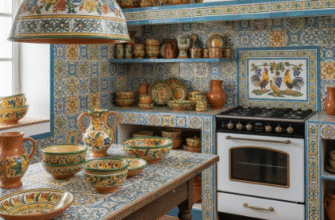
I guess it makes sense that Persian tilework would end up in Mozambique, given that Persian traders were active in the Indian Ocean network for centuries, but I wasn’t prepared for how much of it is still around. In older homes in Maputo and Beira, you’ll find kitchen walls covered in glazed ceramic tiles with geometric patterns that trace directly back to Persian design traditions—probably filtered through Omani or Indian intermediaries, but the aesthetic is unmistakable. These tiles weren’t just decorative; they were functional, providing a surface that could handle heat and moisture and be cleaned easily, which mattered a lot in kitchens where open flames and water were in constant use. The Portuguese later introduced their own azulejo traditions, which layered on top of the earlier Persian-influenced tilework, creating this weird, beautiful hybrid where you might see Islamic geometric patterns next to Baroque floral designs on the same wall. It’s the kind of thing that drives art historians crazy because the provenance is so tangled, but for the people living in these homes, it’s just the kitchen.
Monsoon-Driven Ventilation Systems and How Wind Patterns Literally Shaped Where Stoves Got Placed in Coastal Homes
Turns out, if you’re designing a kitchen in a place where the monsoon winds blow predictably for half the year, you’d better account for them.
Coastal Mozambican kitchens—especially the older ones—often have windows and vents positioned to catch the southeast trade winds that dominate from April to October, pulling smoke and heat out of the cooking area without the need for chimneys or mechanical ventilation. This isn’t accidental; it’s a direct adaptation of ventilation techniques used across the Indian Ocean world, from the barjeel wind towers of the Persian Gulf to the carved wooden ventilation screens you see in Swahili architecture. Stoves and hearths in these kitchens are almost always placed on the windward side of the room, so the natural airflow carries smoke away from the cook and out through strategically placed openings. I’ve seen modern Mozambican architects unconsciously replicate these patterns in contemporary kitchen designs, even when they’re using gas stoves and exhaust fans, because the logic of monsoon-driven ventilation is so deeply embedded in coastal building culture. It’s one of those things where the environment and centuries of accumulated knowledge end up dictating form in ways that feel inevitable once you understand the context, but look totally arbitrary if you don’t. Honestly, it’s a reminder that good design isn’t universal—it’s specific to place, climate, and the movement of people and ideas across water.