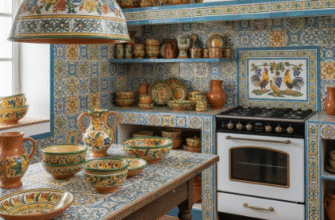
I’ve always thought kitchens were just about cooking, but then I stepped into a home in Amman.
The kitchen there wasn’t tucked away like some afterthought—it sprawled, opened, breathed. Copper pots hung from iron hooks along whitewashed walls, catching afternoon light that filtered through geometric wooden screens called mashrabiya. The floors were pale limestone, cool underfoot even when the desert outside hit 40 degrees Celsius (that’s roughly 104 Fahrenheit, give or take). There was a low wooden table in the corner, scarred from decades of rolling dough, and I realized—wait—maybe this wasn’t just a cooking space. It was the heart of hospitality itself, a place where strangers became guests and guests became family over endless cups of cardamom-laced coffee and trays of steaming mansaf. Jordanian kitchen design doesn’t follow Western logic; it follows something older, something tied to Bedouin traditions of welcoming travelers into tents with whatever food you had, even if it meant your own family ate less that night. The architecture reflects this: open sightlines so you can see who’s arriving, generous counters for communal prep work, and always—always—space for more chairs.
Here’s the thing: modern Jordanian kitchens blend the old nomadic ethic with contemporary needs. You’ll find German-engineered ovens next to clay taboon bread ovens. Marble countertops imported from Italy sit beside hand-painted ceramic tiles from Madaba, each one slightly different because they’re still made by artisans who’ve been doing this since, I don’t know, the Ottoman era probably.
The color palette tends toward earth tones—ochre, terracotta, sand—but punctuated with vibrant blues and greens inspired by the mosaics at Mount Nebo. I used to think this was just aesthetic preference, but it’s actually functional; those darker tiles hide spice stains from za’atar and sumac that would wreck a pristine white kitchen in about three meals.
When the Desert Teaches You How to Store Food and Manage Heat
Honestly, the storage solutions are where things get intricate.
Traditional Jordanian pantries—called makhzan—were designed for preserving food in extreme heat before refrigeration existed, which means they’re naturally cool, dark, ventilated spaces often built into the thickest part of the exterior wall. You’d store jarred makdous (stuffed eggplants in olive oil), dried yogurt balls called jameed (essential for mansaf), and vast quantities of lentils, rice, and bulgur. Modern designers have adapted this by creating walk-in pantries with temperature-controlled sections, but they maintain that same principle: keep staples accessible because hospitality means being ready to feed unexpected guests at any moment. The kitchens also incorporate something I found fascinating—vertical herb gardens growing mint, parsley, and sage right there on interior walls under grow lights, because running to a store breaks the rhythm of cooking, and in Bedouin culture, that rhythm is almost sacred. Cabinet designs favor open shelving more than closed cupboards, partly so you can see what you have (waste is unthinkable when your ancestors survived on scarce resources), and partly because displaying your serving platters and coffee pots is itself a form of hospitality, showing guests you’re prepared to recieve them properly.
The Social Architecture of Cooking Spaces That Actually Want You There
Western kitchens often isolate the cook. Jordanian ones do the opposite.
Islands aren’t just prep stations—they’re gathering points with seating on three sides, designed so guests can shell peas or chop parsley while talking. I guess it makes sense when you consider that dishes like warak enab (stuffed grape leaves) require hours of repetitive rolling; you need company or you’ll lose your mind. The stove placement is deliberate too, usually positioned so the cook faces the room rather than a wall, maintaining eye contact and conversation. Lighting comes from multiple sources: pendant lights over work areas, recessed lighting for ambiance, and often a large window facing east to catch morning sun, because breakfast—futur—is serious business involving labneh, olive oil, fresh flatbread, and again, the possibility of unexpected guests. Ventilation is industrial-grade by necessity; the cooking styles involve high heat, lots of olive oil, and spices like cumin that can permeate everything. Range hoods are massive, often custom-built and covered in the same tile work as the backsplash to maintain aesthetic continuity.
Why Every Detail Connects Back to the Ritual of Welcome
There’s a phrase in Arabic—ahlan wa sahlan—that roughly translates to “you are among family and on smooth ground.”
That philosophy is literally built into the kitchen’s layout. Floors are kept level and unobstructed so elderly guests or those with mobility issues never feel excluded from the cooking process, because participating in food preparation is participating in the family’s most intimate ritual. Seating areas often include low cushioned benches along walls—majlis-style—where older relatives can sit comfortably for hours, supervising, telling stories, passing down techniques that were never written down. The materials chosen tend toward longevity rather than trends; a well-made Jordanian kitchen is expected to serve three generations, maybe more, so you’ll see solid wood cabinets, stone that ages beautifully, brass fixtures that develop patina. I’ve seen kitchens in Petra where the same coffee pot has been used daily for sixty years, its copper worn thin but still functional, still central to the ritual of serving guests that thick, bitter Arabic coffee in tiny cups that you drink in three quick sips. The design accommodates this continuity—dedicated niches for heirloom pieces, reinforced shelving for heavy cast iron, and always, definately, more storage than you think you need, because hospitality means abundance, even if it’s just the abundance of possibility.