I used to think kitchen design was just about granite countertops and stainless steel appliances.
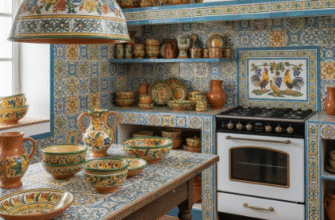
Then I spent three weeks in Baghdad, sitting on low wooden stools in kitchens that looked nothing like the sleek showrooms back home, watching women shape dough with their hands in ways that felt almost sacred. The floors were often tiled in geometric patterns—blues and whites, sometimes greens—that reminded me of the ancient ziggurats I’d seen crumbling in the desert heat. These weren’t kitchens designed for efficiency in the Western sense; they were designed for something older, something that predates the word “efficiency” by roughly four thousand years, give or take. The clay oven in the corner, the tannur, radiated heat like a small sun, and I realized I was looking at a design philosophy that stretched back to the world’s first cities, to Ur and Babylon, to the very birth of civilization itself. The women moved around these spaces with a kind of choreography that seemed effortless, though I’m sure it wasn’t. Their grandmothers had moved the same way, and their grandmothers before them.
Anyway, here’s the thing about Mesopotamian cooking traditions: they’re not museum pieces. They’re alive, messy, constantly adapting while somehow staying rooted in something ancient. The spices tell the story—cardamom, cinnamon, turmeric, sumac—but so does the architecture of the kitchen itself.
The Tannur Oven and the Architecture of Fire Management in Traditional Iraqi Homes
The tannur isn’t just an oven; it’s the gravitational center of the Iraqi kitchen, and it dictates everything else about the space. I’ve seen modern Iraqi kitchens in Erbil and Basra where families have installed gas ranges and electric ovens, all the latest equipment, but they’ve also kept the tannur, usually positioned near an exterior wall or in a dedicated alcove with proper ventilation. The thing reaches temperatures that would make a pizza oven blush—we’re talking 400 to 500 degrees Celsius—and it’s been doing this since the Sumerians were inventing writing. The design is deceptively simple: a clay cylinder, narrow at the top, wider at the bottom, sunk partially into the ground or built up on a raised platform. You fire it with wood or dried dung (yes, dung, which burns hot and clean and was the fuel of choice for millennia), and the clay walls absorb and radiate heat for hours. Bread dough gets slapped directly onto the interior walls, where it bakes in minutes, emerging with those characteristic char marks and a flavor that I honestly can’t replicate in my oven back home, and believe me, I’ve tried. The placement of the tannur determines traffic flow, ventilation patterns, even social dynamics—because you can’t just walk away from a tannur; someone has to tend it, to feed it, to coax the right heat from it.
Wait—maybe I should mention that modern Iraqi architects are now trying to figure out how to integrate tannurs into contemporary designs without setting off smoke alarms or violating building codes. It’s a whole thing.
Low Seating Areas and the Social Geography of Mesopotamian Meal Preparation Spaces
Iraqi kitchens traditionally flow into low seating areas where the actual eating happens, and this isn’t accidental. The kitchen and dining space blur together in ways that would confuse an IKEA designer. I remember sitting cross-legged on cushions in a home in Najaf, watching my host’s mother roll out dough on a low wooden board while her daughter chopped vegetables on another board maybe two feet away, and I was struck by how democratic it all felt. Everyone’s at the same level, literally. There’s no kitchen island creating a barrier between cook and guest, no formal dining table establishing hierarchy. The Mesopotamians figured out thousands of years ago that food preparation is social, that cooking is communal theater, and they built their spaces accordingly. These low seating areas—often arranged around the perimeter of the room with cushions and carpets—allow for conversation, for children to play nearby while adults work, for the constant flow of tea and gossip and recipe advice. The design philosophy is fundamentally different from Western kitchens, which tend to isolate the cook. Here, isolation is almost impossible, which can be exhausting but also kind of beautiful, I guess.
Clay and Copper Cookware Storage Systems That Predate Modern Cabinetry by Millennia
Forget cabinets.
In traditional Iraqi kitchens, cookware lives out in the open, hanging from hooks or arranged on open shelves, and there’s a practical logic to this that took me embarrassingly long to understand. Clay pots need to breathe—store them in an enclosed cabinet and you risk mold, especially in humid climates. Copper vessels, which are still widely used for certain dishes like quzi (slow-roasted lamb) and masgouf (grilled carp), develop a patina that’s actually desireable, and hiding them away defeats the purpose. I’ve seen kitchens where copper pots hang in descending size order along an entire wall, like a kind of metallic musical scale, and it’s both functional and honestly quite stunning. The Mesopotamians were working with clay and copper when Europeans were still figuring out basic pottery, and that expertise shows in how Iraqi cooks treat their equipment. A good clay pot, properly seasoned and cared for, can last generations—I met a woman in Karbala who was using a pot her great-grandmother had used, its surface dark and glossy from decades of use. The open storage system also means you can see at a glance what you have, what needs cleaning, what’s in use. It’s an inventory system that doesn’t require apps or label makers, just eyeballs and memory.
Spice Organization Methods Inherited from Ancient Babylonian Merchant Practices
The spice situation in Iraqi kitchens is, frankly, overwhelming if you’re not used to it. We’re talking dozens of varieties, some whole, some ground, stored in everything from glass jars to small cloth bags to repurposed tin containers. But there’s a method here, an organizational logic that traces back to Babylonian merchants who traded spices along routes that connected the Mediterranean to the Indus Valley. Spices are typically arranged by use frequency and by the dishes they belong to—the spices for biryani live together, the spices for kubba live together, and so on. I used to think alphabetical organization made sense, but watching an Iraqi grandmother navigate her spice collection with the speed and precision of a card dealer made me reconsider everything. She didn’t need to read labels; her hands knew where everything was through muscle memory and association. The containers themselves are often stored in a dedicated spice cabinet or on a specific shelf, usually away from direct heat but close enough to the cooking area to be accessible. Some families still use traditional wooden spice boxes with multiple compartments, designs that haven’t changed much since Mesopotamian traders were measuring out cumin and coriander in ancient Nippur. There’s also the practice of buying spices whole and grinding them fresh, which means many kitchens have a dedicated grinding area with a mortar and pestle—often stone, sometimes brass—that gets used daily.
Water Management and Washing Station Designs Reflecting Tigris-Euphrates Basin Hydraulic Engineering
Here’s something I didn’t expect: Iraqi kitchen design is deeply influenced by water consciousness, by the understanding that water is precious and must be managed carefully. The Mesopotamians were building sophisticated irrigation systems and aqueducts when most of the world was still hauling buckets from rivers, and that hydraulic expertise permeates kitchen design even today. Washing stations are often separate from cooking areas, with dedicated basins for different purposes—one for washing vegetables, one for hands, one for dishes. I’ve seen kitchens with elaborate tilework around washing areas that channels water toward drains with minimal spillage, designs that echo the canal systems of ancient Babylon. Water isn’t wasted; every drop has a purpose. In some traditional homes, greywater from washing vegetables gets collected and used for plants or courtyard gardens, a practice that’s both environmentally sound and culturally ingrained. The placement of these washing stations also reflects the flow of meal preparation: vegetables get washed first, in a station near the entrance or storage area, then moved to the cutting area, then to the cooking area. It’s a linear progression that minimizes backtracking and cross-contamination, a food safety system that predates the FDA by several thousand years. Honestly, watching it in action made me realize how haphazardly I’d been organizing my own kitchen workflow. The Iraqis figured this out when the Tigris and Euphrates were the centers of the known world, and they haven’t forgotten.