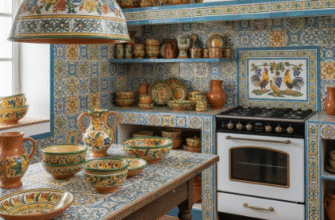
I used to think a kitchen utensil crock was just, you know, a jar you shoved spatulas into.
Turns out the whole ecosystem of countertop tool organization is this weird intersection of ergonomics, material science, and frankly, the psychology of cooking under pressure. I’ve seen people use everything from vintage French stoneware to repurposed coffee cans, and honestly? The container matters way less than how you think about access patterns—which tools you reach for first, which ones clump together, whether your dominant hand naturally arcs toward the back left or front right of your workspace. Some researchers estimate that home cooks make roughly 40 to 60 tool-grabbing motions during a single recipe execution, give or take, and each extra second spent fishing for the right whisk compounds into what cognitive load theorists call “preparation fatigue.” It’s not dramatic, but it’s real.
Here’s the thing: most people overthink aesthetics and underthink physics. A crock that’s too narrow creates a vertical tangle—wooden spoons hooked onto silicone spatulas hooked onto tongs—so you’re essentially playing Jenga every time you need the pasta fork. A crock that’s too wide lets everything splay flat against the walls, which sounds good until you realize you can’t see what’s buried in the back.
Why the Weight Distribution Thing Actually Matters (Even Though It Sounds Boring)
Okay, so: a lightweight ceramic crock filled with eight or nine heavy-handled tools becomes top-heavy. Physics doesn’t care about your farmhouse aesthetic. I guess it makes sense when you think about center of gravity, but I definitely didn’t consider it until I knocked over a crock reaching for a ladle too fast, and suddenly there’s a wooden spoon rolling under the stove and tomato sauce cooling on the pan. Weighted bases—either through material density or deliberately added heft—solve this, but they also make the crock harder to move when you’re wiping down counters.
Some high-end designs use a kind of flared silhouette: narrow base for stability, wider mouth for tool separation. It works, but wait—maybe the better solution is just mounting a rail system or magnetic strip instead?
Except then you lose the spontaneous, tactile browsing experience of a crock, which sounds absurd but actually affects how you cook.
The Weird Anthropology of What Goes In Versus What Stays in a Drawer
There’s no universal rule here, and that’s what makes it so messy and human. In my own kitchen, the crock holds: two wooden spoons, one slotted spatula, one solid spatula, tongs, a whisk, a ladle, and a meat thermometer. The garlic press stays in a drawer. The microplane stays in a drawer. The pastry brush—sometimes it’s in the crock, sometimes it’s not, depending on whether I’ve been baking that week. Cultural context plays a role too: in kitchens where wok cooking dominates, the wok spatula and ladle are always front-and-center, often in a dedicated holder near the stove rather than a general countertop crock. In European kitchens with limited counter space, I’ve seen people abandon crocks entirely in favor of wall-mounted systems or even hanging their tools from hooks inside cabinet doors.
Anyway, the decision tree is deeply personal. You’re essentially curating a physical interface for muscle memory.
Material Choices Are Quieter Than You Think (Until They’re Not)
Stoneware crocks don’t rattle. Metal ones do. If you cook late at night or live in an apartment with thin walls, the acoustic difference is noticable—grabbing a metal whisk from a stainless steel container creates this bright, clanging feedback that feels louder than it objectively is. Bamboo holders mute the sound but absorb moisture and food oils over time, developing a slightly sticky patina unless you wash them regularly, which almost no one does because, honestly, who remembers to clean the utensil holder? Wood does the same thing but ages more gracefully, or at least we’ve culturally agreed to call the darkening “patina” instead of “grime.” Plastic is lightweight and dishwasher-safe but tips over easily and often looks cheap even when it’s not, which might not matter functionally but does matter if your kitchen is visible from your living space and you care about that sort of thing, which some people do and some people don’t.
I guess the point is: there’s no perfect answer. Just trade-offs you can live with, and a few you can’t.