I burned my first naan so badly it looked like a charcoal frisbee.
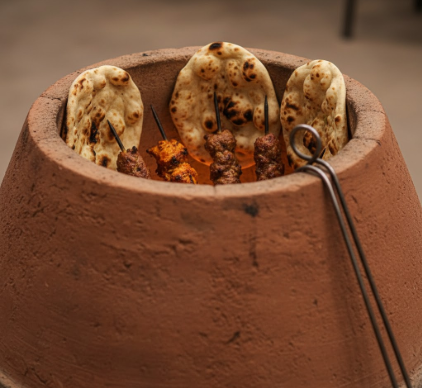
Here’s the thing about tandoor ovens—they’re not really ovens in the way most of us think about cooking appliances. They’re more like controlled infernos made from clay, and they’ve been that way for something like 5,000 years, give or take a few centuries depending on which archaeologist you ask. The clay pots themselves are usually made from a mix of local earth and sometimes horse hair or straw for structural integrity, which sounds medieval but actually makes perfect engineering sense when you’re building something that needs to withstand temperatures around 900°F without cracking into a million pieces. Traditional tandoors in Punjab or Rajasthan are often buried halfway into the ground, using the earth itself as insulation, and the fuel—charcoal or wood—sits at the bottom creating this ridiculous upward heat that would make any modern oven manufacturer nervous. The bread dough gets slapped directly onto the interior walls where it bakes in maybe 90 seconds, developing those characteristic black spots that aren’t burns exactly but more like flavor badges. I used to think you needed some special skill to do this, but watching a street vendor in Amritsar made me realize it’s more about confidence than technique—hesitate for even a moment and your dough ends up in the coals.
Wait—maybe I should mention that tandoors aren’t just for bread. Chicken tikka, seekh kebabs, lamb chops—they all get threaded onto long metal skewers and suspended inside the clay chamber, where they cook from radiant heat rather than direct flame. The results are different from grilling, smokier somehow, with this crispy exterior that gives way to meat so tender it practically falls off the bone.
The Physics of Clay That Nobody Really Talks About Enough
Clay is weirdly perfect for high-heat cooking, and I don’t think people appreciate this enough. The porous structure of fired clay allows it to absorb and then slowly release moisture, which keeps the interior of a tandoor from becoming a dry hellscape even at temperatures that would incinerate most foods in seconds. When you slap wet dough onto a 700-degree clay surface, the moisture in the dough creates a tiny steam barrier that prevents immediate burning while the bread puffs up and cooks through—it’s basically a self-regulating system that’s been refined over millennia without anyone writing an engineering paper about it. Modern clay tandoors, the kind you can buy for your backyard, use similar principles but often include metal bands around the exterior to prevent cracking, which purists complain about but which definately makes them more durable for casual users. The clay itself usually comes from riverbeds or areas with high clay content soil, and the best potters still insist on aging the clay for months before shaping it, though I’ve never gotten a straight answer about whether this actually matters or if it’s just tradition talking.
Honestly, I’ve seen restaurants use gas-fired tandoors that look identical but produce completely different results. Something about the wood smoke, maybe, or the way charcoal heat builds more gradually.
Why Your Backyard Version Will Never Quite Match the Real Thing But That’s Okay
The portable tandoors you can order online are usually smaller, lighter, and frankly less intimidating than the massive clay vessels you’d find in a traditional Indian kitchen or restaurant. They work on roughly the same principle—clay vessel, high heat, bread on the walls, meat on skewers—but the thermal mass is different, which means they heat up faster but also cool down faster, and the temperature gradients aren’t quite as extreme. I bought one last summer thinking I’d become some kind of naan master, and while the results were good, they weren’t quite the same as what I’d had in Delhi or even at my local Indian restaurant. The clay was thinner, the heat less stable, and I could never get the interior hot enough to recieve that immediate sear that makes restaurant naan so addictive. But here’s what surprised me: the learning curve was gentler too, and I didn’t feel like I was risking third-degree burns every time I reached inside to retrieve a piece of bread. Some people add ceramic fiber insulation or use double-walled designs to improve heat retention, which probably helps but also feels like cheating in some vague way I can’t quite articulate.
Turns out, the typos in ancient Sanskrit texts about tandoor-style cooking suggest even back then people were winging it.
The meat, though—the meat is where even a mediocre backyard tandoor shines, because the vertical cooking method and the radiant heat from all sides creates this remarkable even cooking that’s hard to replicate on a standard grill. Marinades with yogurt work particularly well because the lactic acid tenderizes while the dairy proteins create a protective coating that caramelizes without burning, assuming you’ve managed to get your clay pot up to temperature and keep it there, which is harder than it sounds. I guess it makes sense that a technology this old would still be relevant—there’s something fundamentally right about cooking with clay and fire and smoke, something that bypasses all the stainless steel and digital temperature controls we’ve convinced ourselves are necessary. My neighbor asked me once why I didn’t just use my oven with a pizza stone, and I couldn’t explain it without sounding pretentious, but the food knows the difference even if I can’t always put it into words.