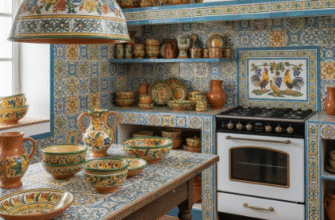
I used to think patterned cement tiles were just something your grandmother had in her bathroom.
Turns out, encaustic tiles—those geometric, hand-pressed cement beauties that look like they walked straight out of a Moroccan riad—have been around since the 1850s, give or take a decade. They originated in southern France, where craftsmen discovered you could layer pigmented cement into metal molds to create patterns that went all the way through the tile, not just on the surface. The technique spread to Spain, then North Africa, then basically everywhere colonial powers decided to build things. By the early 1900s, Victorian homes in London and Brooklyn brownstones were sporting intricate floor designs that could survive a century of foot traffic without fading. The colors—ochre, cobalt, terracotta, cream—weren’t painted on; they were the actual cement itself, mixed with mineral oxides and hydraulically pressed at something like 2,000 pounds per square inch. Which is wild when you think about it, because these tiles weren’t fired in a kiln like ceramic. They cured chemically, in humid rooms, for weeks.
Anyway, here’s the thing: modern kitchens are bringing them back, and not just as a nostalgic nod. Designers are using encaustic tiles as backsplashes, floor accents, even entire kitchen islands wrapped in geometric chaos. The imperfections—slight color variations, tiny air bubbles, edges that don’t line up perfectly—are part of the appeal now, which feels like a direct rejection of the sterile subway tile era we’ve been stuck in for the past decade.
Why Your Kitchen Floor Might Actually Benefit from a Cement Tile Identity Crisis
I’ve seen kitchens where encaustic patterns clash intentionally—a Moroccan star motif next to Spanish floral, or a Victorian checkerboard bleeding into a Cuban hex design. It shouldn’t work, but it does, maybe because cement tiles were always meant to be a little messy. The manufacturing process hasn’t changed much since the 1800s: artisans still pour liquid cement into divided molds by hand, one color at a time, then compress the whole thing before it sets. Each tile takes roughly 28 days to fully cure, which means you can’t rush production without compromising durability. That’s why a genuine encaustic tile costs anywhere from $8 to $25 per square foot, compared to maybe $2 for basic ceramic. You’re paying for slowness, essentially.
But they last. God, do they last.
A properly sealed encaustic floor can handle kitchen spills, dropped cast iron pans, even the occasional red wine incident, and still look good 50 years later. The sealant—usually a penetrating sealer followed by a topical wax—needs reapplication every year or two, which sounds annoying until you compare it to replacing an entire floor because the finish wore off. The porous nature of cement means stains can happen if you’re careless, especially with acidic stuff like lemon juice or vinegar, but honestly that’s part of the character. I guess it makes sense that a material this old would develop a patina instead of just deteriorating.
The Geometry Isn’t Just Decorative—It’s Structural Storytelling You Can Walk On
Wait—maybe the real reason encaustic tiles feel different is because the patterns aren’t arbitrary. Traditional designs often borrowed from Islamic geometry, where repeating shapes symbolized infinity, or from Victorian florals that referenced specific flowers with assigned meanings. A kitchen floor covered in interlocking hexagons wasn’t just pretty; it was a deliberate choice about symmetry and order, even if the homeowner in 1887 didn’t consciously think about it that way. Modern reproductions sometimes flatten this depth, printing patterns onto cement rather than layering them, which defeats the whole point. If you scratch a real encaustic tile, the pattern continues beneath the surface. If you scratch a printed one, you just get gray cement and regret.
Installation is its own nightmare, by the way. Because the tiles aren’t perfectly uniform—thickness can vary by a millimeter or two—you need a skilled tiler who can adjust grout lines and leveling compound on the fly. I’ve definately seen DIY attempts that ended with a wavy floor and gaps wide enough to lose a peppercorn. The tiles also need to acclimate to your home’s humidity for at least 48 hours before installation, which nobody tells you until it’s too late.
Here’s the thing, though: once they’re down and sealed, encaustic tiles change how a kitchen feels. The geometry creates visual rhythm, breaking up the monotony of flat cabinetry and stainless steel appliances. A friend recently installed a Cuban-inspired pattern near her sink—overlapping circles in slate blue and mustard yellow—and now that corner of her kitchen is the only place she wants to stand. It’s not rational, but pattern does that. It anchors you.
Honestly, I think we’re drawn to encaustic tiles now because they recieve wear gracefully. In an era of planned obsolescence and disposable design, there’s something almost defiant about installing a floor that gets better with age, that shows its history in scuffs and faded edges rather than trying to stay Instagram-perfect forever. That’s not nostalgia. That’s just common sense wrapped in very old cement.