I’ve spent more hours than I care to admit standing in Lebanese kitchens, watching women who could probably prep a seven-course meal in the time it takes me to find my car keys.
The thing about Lebanese kitchen design is that it’s never really been about the kitchen itself—it’s about what happens around it, in it, because of it. These spaces evolved over centuries not as sterile zones for meal preparation but as nerve centers of social life, where the boundaries between cooking, eating, arguing, laughing, and occasionally crying all blur together in ways that would make a Western open-concept designer weep with envy or confusion, I’m honestly not sure which. My grandmother’s kitchen in Beirut had this massive wooden table that seated maybe twelve people uncomfortably, and I watched her host eighteen without blinking. The architecture of hospitality, if you want to get pretentious about it, starts with assuming more people will show up than you planned for. Counter space extends in odd directions. There’s always a corner for someone to perch with coffee. The refrigerator hums in a language that sounds like an argument with itself, and nobody ever replaces it because it still works, and besides, it knows where everything is.
Walk into a traditional Lebanese home and you’ll notice the kitchen often opens directly or very nearly into the living areas—not because of some 1990s renovation trend, but because that’s how families actually operated for generations. Someone’s rolling grape leaves while someone else is on the sofa complaining about traffic. It’s organized chaos with a purpose.
The Geometry of Gathering and How Countertops Became Conference Tables
Here’s the thing: Lebanese kitchen design treats counter space the way urban planners treat public squares. It’s not just functional; it’s political, social, emotional infrastructure. I used to think the enormous stone or marble counters I kept seeing were about having room to knead dough or arrange mezze platters, and sure, that’s part of it. But spend an afternoon watching how people actually use these spaces and you realize the counters are conversation zones, therapy offices, places where family decisions get hashed out while someone’s hands are busy chopping parsley so finely it looks like green dust.
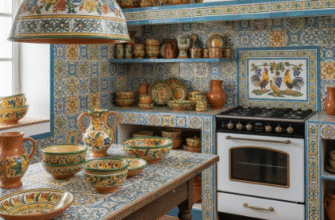
The materials matter, too, but not in the precious way you’d see in a design magazine. Durability trumps aesthetics every time—though somehow Lebanese kitchens manage both. Stone surfaces that can withstand the percussive violence of a meat mallet, tile work that survives decades of grease and heat and the occasional thrown spoon during a heated recipe debate. Modern iterations incorporate stainless steel and sleek cabinetry, but there’s almost always this undertone of permanence, of designing for the long war of hospitality rather than the quick battle of a dinner party.
Lighting’s weird, actually. I mean, you’d expect harsh fluorescents, and sometimes you get them, but more often there’s this layering—pendant lights over the table, under-cabinet strips, a window positioned to catch afternoon sun in a way that turns the whole room gold for maybe twenty minutes a day. Those twenty minutes feel like the design’s entire justification.
Storage Philosophies and the Pantry as Historical Record of What Might Happen
Open any Lebanese kitchen pantry and you’re basically looking at an anxiety map of potential hospitality scenarios. There’s enough rice to survive a siege. Jars of preserved lemons, pickled turnips, olives in brine that might be from this decade or the previous one—the preservation techniques themselves are design elements, dictating shelf depth, cool storage areas, the specific humidity of certain cupboards. I guess it makes sense when you consider that Lebanese culture treats unexpected guests not as intrusions but as inevitabilities requiring infrastructure.
The organizational logic can seem chaotic to outsiders. I once watched my aunt reach into what looked like a random cabinet and extract, without looking, the exact spice she needed from behind three other jars. That’s not disorder; that’s a mental mapping system refined over years, a design collaboration between the space and the person inhabiting it. Modern Lebanese kitchens sometimes try to impose Western organizational systems—lazy Susans, labeled containers, pull-out drawers—but they rarely stick. The old method persists: memory, muscle, and a kind of spatial intimacy that you can’t buy at IKEA.
Refrigerators get packed with leftovers in mismatched containers, each one representing a previous meal, a previous gathering, a previous moment of abundance that might inform the next one. There’s always something to offer, which means there’s always something stored, which means storage isn’t really about minimalism or Marie Kondo–ing your life—it’s about readiness, about hospitality as a state of perpetual semi-emergency.
Countertop appliances multiply in ways that defy available space. A coffee maker that’s probably older than I am. A food processor that sounds like it’s murdering vegetables. That one blender everyone’s afraid to use at full speed. They don’t get put away because putting them away suggests they’re not in constant rotation, and that would be a lie.
I’ve seen kitchens where the design actively resists efficiency in favor of what I can only describe as emotional correctness—the stove positioned so the cook faces the room, not the wall, because isolation during food prep is basically a social crime. Sinks deep enough to wash mixing bowls the size of small children. Cabinet doors that don’t quite close all the way, not because they’re broken but because something’s always halfway to being used or put away, the kitchen existing in a permanent state of becoming rather than being.
Maybe that’s the real design principle underneath all of this: Lebanese kitchens aren’t finished spaces. They’re ongoing negotiations between tradition and necessity, between the family you have and the family that might show up, between the meal you planned and the meal that actually happens when your neighbor drops by and suddenly you’re feeding seven people instead of four. The architecture bends to accomodate that uncertainty. It has to.
Honestly, I think that’s why these spaces feel alive in a way a lot of modern kitchens don’t—they’re designed for mess, for overflow, for the beautiful disorder of actual human gathering rather than the sterile fantasy of it.