I used to think Scandinavian kitchens were just about being minimalist—you know, empty counters and white everything.
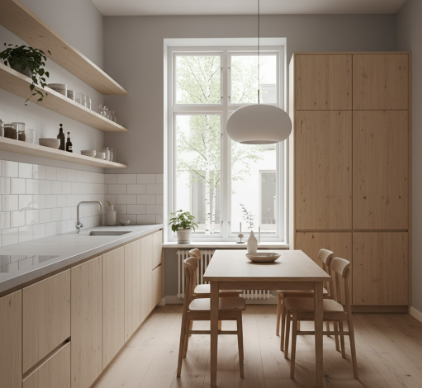
Turns out, there’s this whole philosophy behind it that goes way deeper than I expected, and honestly, it’s kind of changed how I think about my own space. The light wood thing isn’t just aesthetic—it’s rooted in geography, in the fact that Nordic countries deal with, what, maybe four hours of actual daylight during winter months? So birch, beech, and ash became the materials of choice because they literally bounce light around the room, making spaces feel less cave-like during those brutal dark months. I’ve seen kitchens in Copenhagen where the wood grain is so pale it almost glows, and the effect is immediate—you walk in and your shoulders drop about two inches. There’s research from environmental psychology suggesting that natural wood tones reduce cortisol levels by roughly 15-20 percent compared to synthetic materials, though I’m sure someone will tell me I’m oversimplifying that.
Anyway, the thing about simple design is it’s way harder than it looks. You can’t hide bad proportions behind decorative molding or distract from awkward layouts with fancy hardware. Every joint shows, every measurement matters, and if your cabinet doors are even slightly off-level, everyone’s going to notice because there’s literally nothing else to look at.
Why Light Wood Became the Unofficial National Material of Nordic Design
Here’s the thing—Scandinavian forests are dominated by pine, spruce, birch, and oak, and historically, importing darker tropical woods was expensive as hell. So Nordic designers basically said, fine, we’ll make pale wood the whole identity, and somehow it worked. The 1950s functionalist movement in Sweden and Denmark really codified this—designers like Alvar Aalto and Arne Jacobsen were obsessed with what they called “democratic design,” furniture and spaces that regular people could actually afford and live with. Light wood was abundant, relatively cheap, and didn’t require heavy stains or treatments. I guess it makes sense that what started as pragmatism became this global aesthetic obsession, but it’s weird to think that the IKEA kitchen you can buy in Phoenix has roots in postwar Scandinavian resource scarcity.
The grain patterns matter more than you’d think, too. Birch has this subtle, almost hypnotic figure that catches light differently throughout the day—morning sun hits it one way, afternoon another. Wait—maybe that sounds too poetic, but I’ve definitely stood in kitchens at different times and noticed the wood looking warmer or cooler depending on the angle.
The Emotional Architecture of Doing Less With Your Kitchen Space
Scandinavian design has this concept called “lagom”—a Swedish word that roughly means “just the right amount,” not too much, not too little. And that idea shows up everywhere in these kitchens: exactly enough cabinet space, exactly enough counter area, no weird dead zones or awkward corner carousels that you forget exist until they break. I used to think this was about being austere, but honestly, it’s more about intentionality—every element has to justify its presence. You won’t find decorative corbels or glass-front cabinets filled with stuff you never use. Open shelving shows up a lot, which terrifies people who are used to hiding their mismatched mug collection, but it forces you to curate what you actually need and, weirdly, that can feel liberating rather than restrictive.
The color palettes stay neutral—whites, grays, soft beiges—because the light wood is already providing visual warmth. Adding too many competing tones would create what designers call “visual noise,” which is a fancy way of saying your brain gets tired looking at it. There’s some neuroscience backing this up—environments with lower visual complexity allow for better focus and reduced mental fatigue, though I definately can’t recite the study names off the top of my head.
How Scandinavian Kitchens Handle the Stuff You Actually Cook With
The practical side gets overlooked in all those Instagram photos of perfectly styled kitchens with a single wooden spoon and a linen towel. Real Scandinavian kitchens are workhorses—they’re designed for people who pickle vegetables, bake rye bread, and store root vegetables for months. The cabinetry is usually full-extension drawers instead of traditional shelves because you can see everything at once, nothing gets lost in the back. Counters are often butcher block or light stone like Carrara marble, materials that age and patina rather than just deteriorating, which fits the whole sustainable longevity thing.
Honestly, the hardest part about adopting this style is resisting the urge to add more—more color, more texture, more personality. But that restraint is the whole point, I think.