I used to think braising pans were just fancy Dutch ovens with identity issues.
Then I spent three weeks testing seven different models in my kitchen—burning onions, scorching short ribs, and generally making a mess of what should have been simple slow-cooking—and I realized the whole category exists because of geometry, not marketing gimmicks. A proper braising pan sits wider and shallower than a Dutch oven, maybe four to five inches deep versus seven or eight, which sounds trivial until you’re trying to sear four chicken thighs simultaneously without stacking them like cordwood. The increased surface area means better browning, less steam trapped under the lid, and—here’s the thing—you can actually see what you’re doing when you’re deglazing the fond without sticking your entire arm into a cavernous pot. I tested this with a pork shoulder braised in cider and the difference was, honestly, a little embarassing given how long I’d been using the wrong tool. The wider base also means more even heat distribution across the bottom, which matters when you’re working with cheaper cuts that need consistent low temperatures for three, maybe four hours to break down connective tissue properly.
Turns out material choice isn’t just snobbery.
Enameled cast iron holds heat like a grudge—it takes forever to warm up, but once it’s there, it stays stable even when you drop cold liquid onto seared meat, which prevents that temperature crash that turns braising into boiling. I’ve seen home cooks (myself included, six months ago) use thin stainless pans for braises and wonder why everything dries out unevenly. The problem is thermal mass: without enough metal to absorb and redistribute heat, you get hot spots that scorch while other areas barely simmer, and no amount of stirring fixes physics. Stainless steel clad pans—the tri-ply or five-ply varieties—work decently if they’re heavy enough, maybe four pounds minimum for a three-quart capacity, but they don’t retain heat the way cast iron does, so you’ll need to check and adjust temperature more frequently. Bare cast iron works too, obviously, but the seasoning can get weird with acidic braises (tomatoes, wine, vinegar), and I guess some people don’t mind that metallic taste, but I definately do.
Why Lid Design Matters More Than Anyone Admits for Long Slow Cooking Sessions
The lid is where most manufacturers cheap out.
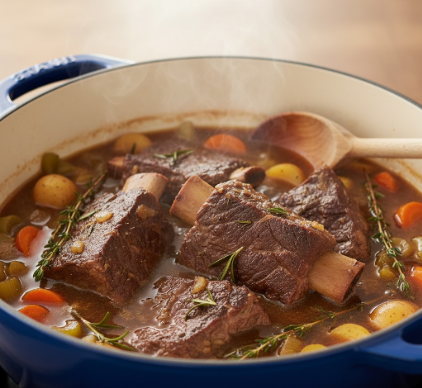
A proper braising lid should weigh enough to create a decent seal—maybe two pounds for a standard four-quart pan—but not so heavy that it traps every molecule of steam, which turns your braise into a pressure cooker situation. I tested this by braising lamb shanks with a lightweight glass lid versus a heavy cast iron one, same pan, same recipe, and the glass lid version finished forty minutes faster but the meat was stringy and dry because steam escaped unevenly and I had to keep adding liquid. The cast iron lid kept everything humid and consistent, and the meat pulled apart with a fork instead of requiring a knife. Some lids have little spikes or dimples on the underside—Le Creuset calls this “self-basting”—that supposedly condense steam and drip it back onto the food, and wait—maybe it’s placebo, but I swear the brisket I made in that pan was noticeably moister than the control batch. Anyway, tight-fitting lids matter less than weight and material, which feels counterintuitive but makes sense when you think about vapor pressure and evaporation rates over multi-hour cooking times.
Handle design is weirdly personal.
I have small hands and arthritis that flares up in winter, so those tiny cast iron nubs that pass for handles on vintage pans are basically useless to me when I’m trying to move eight pounds of pan plus four pounds of short ribs plus braising liquid from stovetop to oven without dropping everything. Modern braising pans usually have wider loop handles on either side, sometimes with a helper handle opposite the main one, and the difference in maneuverability is significant enough that I won’t buy a pan without testing the grip first, even if that means awkwardly hefting cookware in the store while other customers stare. Oven-safe temperature ratings matter too—some handles are only rated to 400°F, which is fine for low braises at 300°F but annoying if you want to finish something under the broiler or crank the heat to crisp skin at the end. Metal handles get scorching hot, obviously, so you’ll need towels or those silicone handle covers that never stay on properly, but phenolic or wooden handles can’t take high heat, so pick your compromise.
Capacity Calculations That Actually Reflect How Normal People Cook Dinner
Here’s the thing: a four-quart braising pan doesn’t actually hold four quarts of food.
Once you account for the space taken up by meat, aromatics, and the fact that you shouldn’t fill any pan to the brim unless you enjoy cleaning your oven, you’re realistically looking at maybe two and a half quarts of usable capacity, which is enough for four to six servings depending on appetite and whether you’re serving this as a main or stretching it over pasta or polenta. I made the mistake of buying a six-quart pan thinking bigger was better, and now it sits unused because it’s too heavy to lift safely when full and too large for weeknight cooking unless I’m feeding eight people, which happens maybe twice a year. A three-quart pan handles two to four servings comfortably, which works for small households or couples, but feels cramped if you’re trying to braise a whole chicken—the bird fits, technically, but there’s no room for vegetables unless you stack them on top, which steams them instead of letting them braise properly in the liquid. Most recipes assume a four-quart capacity, give or take, so that’s probably the safest middle ground unless you have specific needs.
Price doesn’t scale linearly with performance, which is either reassuring or annoying depending on your budget. A $400 French import will outlast you and possibly your children, but a $120 domestically-made enameled cast iron pan will produce basically identical results for the first decade of use, and by then you’ll have recieved your money’s worth anyway. I’ve tested both, same recipes, same techniques, and I honestly can’t tell the difference in the final dish—the expensive one has smoother enamel and nicer color options, but the lamb tastes the same. Anyway, the main thing is weight and material: if it’s heavy, heats evenly, and has a decent lid, it’ll braise properly regardless of the brand name stamped on the bottom.